Washington’s Dangerous Capitulation to Riyadh
The U.S.-Saudi nuclear agreement is a historic capitulation: Washington hands Riyadh the path to uranium enrichment, shatters the UAE gold standard, and betrays Israel. A dangerous pact that severely threatens global security and Middle East peace.
The Nuclear Suicide Pact and the End of Western Credibility
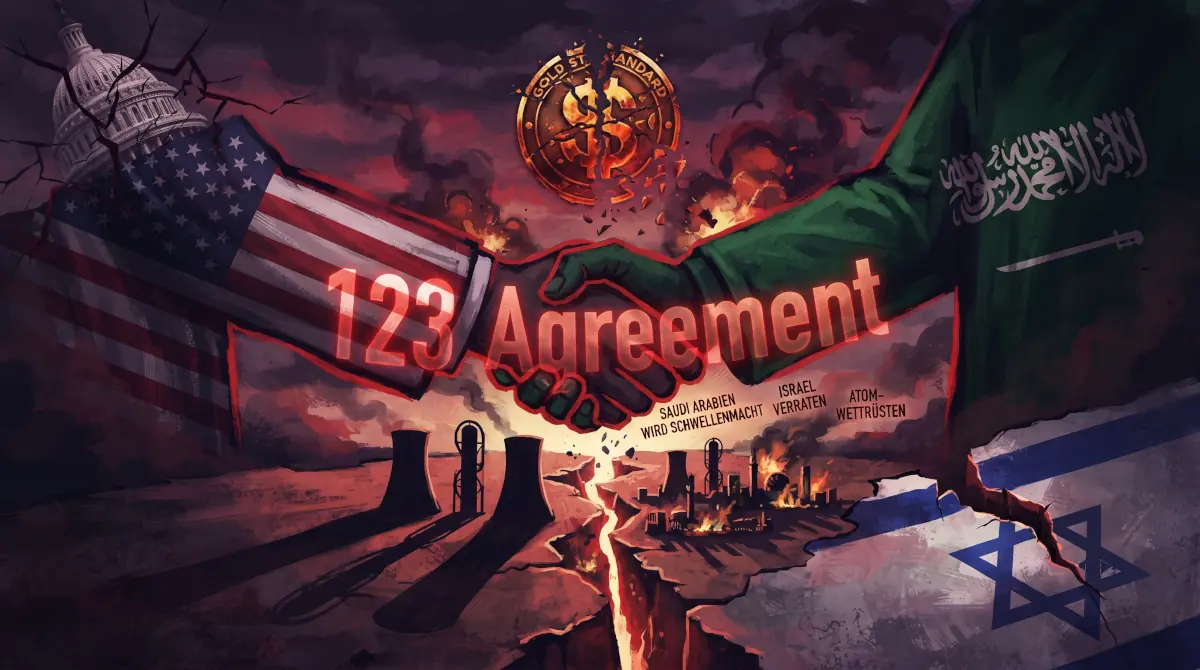
Those in Washington who believed they could control the forces they unleash are about to awaken to a geopolitical nightmare. The nuclear agreement signed on July 22, 2026, by U.S. Secretary of Energy Chris Wright and Saudi Energy Minister Prince Abdulaziz bin Salman is not a diplomatic milestone, but a historic capitulation to an absolute regime [1.1]. It represents a bankruptcy of U.S. foreign policy that the West will pay dearly for. Saudi Arabia is not the reliable ally it is reflexively and repeatedly portrayed as by Western think tanks. Crown Prince Mohammed bin Salman (MBS) is a dangerously reckless autocrat who has proven time and again that he stops at nothing to pursue his regional hegemonic ambitions with ruthless severity.
While Washington allegedly entered ongoing military escalations in the Middle East to crush Iran's nuclear ambitions with iron resolve, it is simultaneously flinging open the door for the Wahhabi kingdom to become a clandestine nuclear power [1.2, 1.4]. It is a fatal double game that legitimizes the horrors of terror and betrays the entire Western security architecture.
An Islamist State with a License to Explode
It borders on collective delusion that the administration in Washington is handing the critical technology of uranium enrichment to a nation whose ideological breeding ground has fueled global Islamist terrorism for decades. Saudi Arabia is not a modern constitutional state, but an absolute theocracy whose intelligence agencies and networks have a proven history of financing extremist ideologies and radical militias.
When Riyadh is now granted the legal right under the concluded "123 Agreement" and accompanying bilateral pact to build out the critical phases of the nuclear fuel cycle—specifically uranium enrichment and the optional reprocessing of spent nuclear fuel—this is far from harmless energy policy [1.1, 1.2]. It is the blueprint for so-called nuclear threshold capability.
Crown Prince Mohammed bin Salman has never disguised his motives: in multiple interviews, including with CBS and Fox News, he made it unequivocally clear that Saudi Arabia would catch up and build the bomb "as fast as possible" if arch-rival Iran acquires nuclear weapons. This agreement drastically shortens Riyadh's path to the bomb. Instead of non-proliferation, Washington is actively engaging in proliferation here.
The Betrayal of Israel and the Shattering of the "Gold Standard"
Particularly insidious is the fact that this multi-billion-dollar nuclear gift was decoupled in the summer of 2026 from the original prerequisite of diplomatic normalization with Israel [1.2]. Previous rounds of negotiation under Biden and at the beginning of the decade stipulated that a technological quantum leap of this magnitude must be tied to historic steps toward peace with Israel. Now, Washington is caving to the crown prince’s extortion tactics, handing him the maximum strategic gain while leaving the Israeli state utterly isolated and defenseless.
Leading Israeli security experts and politicians—including former Prime Minister Naftali Bennett—immediately sounded the alarm, warning of a "severe strategic failure" [1.4]. The deal massively erodes Israel's military edge in the region.
Furthermore, the agreement shatters the holy grail of American non-proliferation policy: the so-called "Gold Standard", which the United Arab Emirates (UAE) was bound to sign back in 2009. At that time, the Emirates contractually committed to completely forgoing domestic uranium enrichment and reprocessing [1.3]. Saudi Arabia, however, flatly refuses this waiver—and Washington cowers [1.3]. Instead, policymakers rely on opaque, watered-down bilateral control mechanisms while completely bypassing the mandatory Additional Protocol of the International Atomic Energy Agency (IAEA) across the entire state territory [1.2, 1.3]. The latter would grant the IAEA unrestricted, unannounced inspection rights over all suspicious facilities nationwide—a level of control that Riyadh categorically rejects.
The Illusion of the "Black-Box" Model and Corporate Greed
To pacify the public, administration-friendly circles in Washington are floating reports about a so-called "black-box" model. According to this narrative, American corporations like nuclear giant Westinghouse (owned by Brookfield Asset Management and Cameco) would build and operate the sensitive parts of the enrichment facility, denying Saudi technicians full access to critical centrifuge designs [1.1, 1.3, 1.4].
This depiction is deception of the worst order. An enrichment facility on Saudi territory inevitably creates the physical foundation, trained workforce, institutional supply chains, and technological know-how that can be nationalized or repurposed at any moment in the event of a political rupture between Washington and Riyadh. A 30-year lifespan backed by investments totaling tens of billions of dollars provides countless loopholes [1.1, 1.2].
Ultimately, this policy is driven by naked capitalism and the lobbying power of the U.S. nuclear sector. The Trump administration is convincing itself that Riyadh would otherwise simply turn to Russian (Rosatom) or Chinese state conglomerates [1.2, 1.5]. Yet instead of standing firm and defending global non-proliferation, the U.S. superpower is blackmailing itself with the argument of alleged alternativelessness. It is folding simply to secure a few billion-dollar contracts for domestic industrial corporations.
A Historic Disaster Foretold
Unless Congress steps in with a bipartisan initiative in the coming weeks and months to pull the emergency brake—even though parliamentary hurdles are immense given the White House's veto powers—the Western world will bitterly regret the consequences of this kneel-down [1.2, 1.5].
Washington has unlocked the doors to the nuclear club for a dangerously expansionist autocrat while simultaneously betraying a longstanding, closest ally in the Middle East. The ultimate price for this geopolitical gambling will not be paid by corporate executives in Westinghouse boardrooms or corrupt lobbyists in Washington, but by global security in an already perilous world.
Sources and Background Research
- U.S. Department of Energy (DoE): Official announcement regarding the conclusion of the 123 Agreement and the bilateral security agreement between Chris Wright and Prince Abdulaziz bin Salman (July 22, 2026) [1.1].
- Reuters & Associated Press (AP): Exclusive reporting on the circumvention of the IAEA Additional Protocol and the long-term dangers of Saudi uranium enrichment [1.2, 2.3].
- The Washington Post & The Times of Israel: Analyses of fierce reactions from Israeli politicians and U.S. Democrats (including Senator Edward Markey) regarding the looming nuclear arms race in the Middle East [1.2, 1.4, 2.2].
- Center on Global Energy Policy (Columbia University): Technical assessments comparing the deal to the 2009 UAE "Gold Standard" and the control mechanics of the "black-box" architecture [1.3].