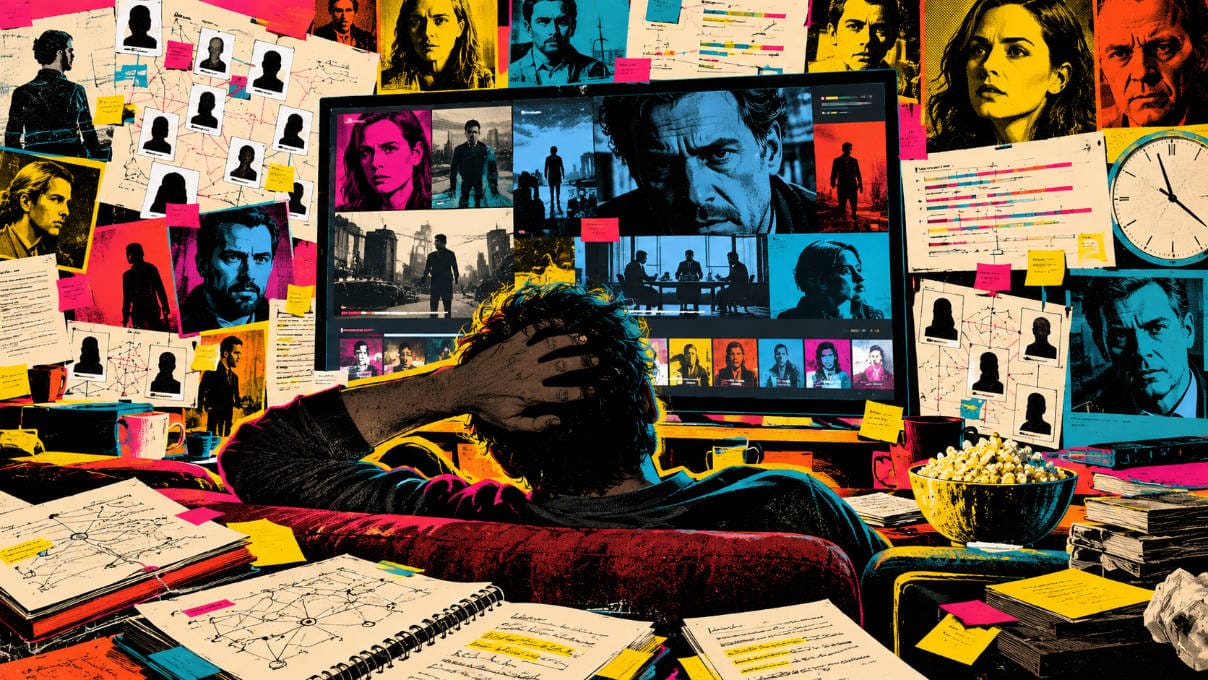
Streaming Gave Us Everything. So Why Are We Watching Old TV?
Streaming gave viewers almost unlimited choice, yet familiar shows remain irresistible. The reason may have less to do with nostalgia than exhaustion: when entertainment itself becomes another decision, the series we already know can feel less like television and more like somewhere safe to return.
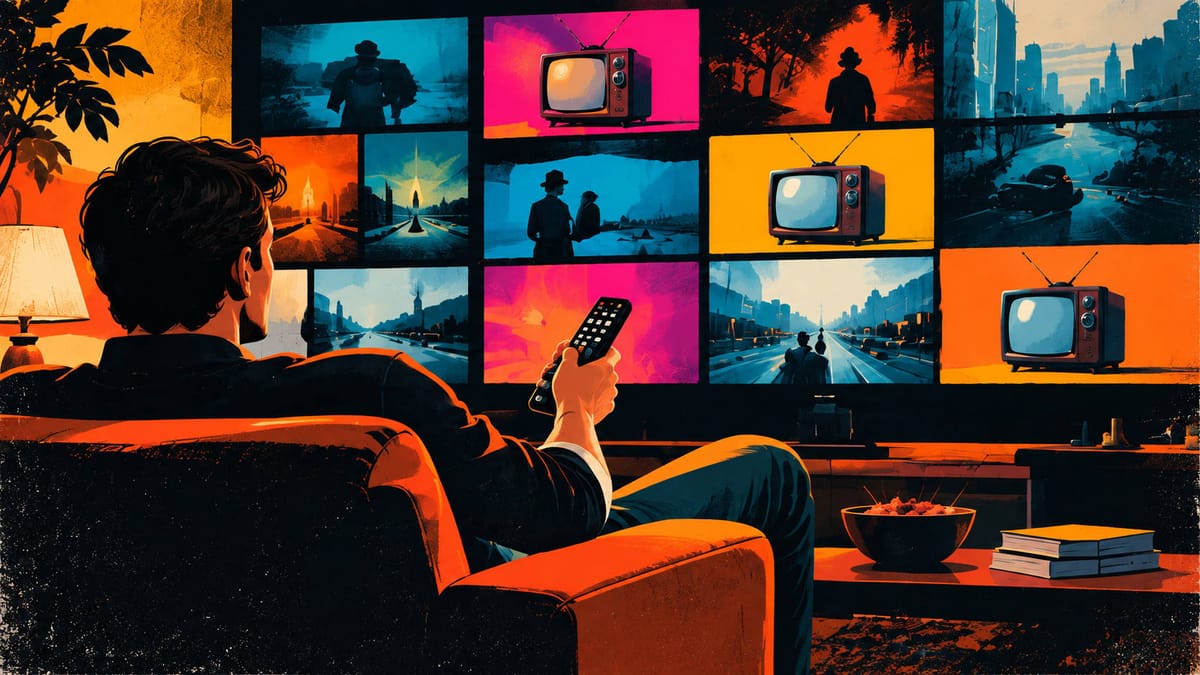
Streaming promised endless discovery. Instead, some of the most watched shows are ones viewers already know by heart.
Streaming solved television’s oldest problem.
There was never enough to watch.
Now there is too much.
Netflix, Hulu, Max, Peacock, Prime Video, Paramount+, Apple TV and dozens of smaller services have created a library of entertainment so large that nobody could consume more than a fraction of it.
The revolution worked.
We have everything.
So why do so many people keep watching television they have already seen?
The answer may be simpler than the platforms would like.
Unlimited choice does not always feel like freedom.
Sometimes it feels like work.
Infinite choice became another task
There was a time when watching television meant accepting whatever happened to be on.
That was restrictive.
It was also easy.
Streaming removed the restriction and created a new ritual.
Open one app.
Scroll.
Read the synopsis.
Watch half a trailer.
Back out.
Try another service.
Scroll again.
Search for something somebody recommended last week.
Discover it is only available on a platform you cancelled two months ago.
Reconsider your life.
Twenty minutes later, you have consumed nothing except thumbnails.
Then somebody suggests an old sitcom you have seen twelve times.
Relief.
You already know whether it is good.
You already know the characters.
You know which relationships survive.
You know where the jokes are.
You know whether the ending will disappoint you.
The familiar show wins because it removes uncertainty.
Comfort TV asks almost nothing from us
New television demands attention.
Who is he?
Why does she hate her sister?
Was that man in episode one?
Why did they mention Helsinki?
Should I remember Helsinki?
A familiar series eliminates the examination.
You can make tea.
Answer a message.
Fold laundry.
Look away for thirty seconds.
Fall asleep briefly.
When you return, the plot has not transformed into an international conspiracy you were apparently supposed to understand from the color of somebody’s notebook.
This is television functioning less as narrative than environment.
And that may be exactly what many viewers want.
The show becomes a room you already know how to enter.
Streaming accidentally reinvented radio
There is an irony in this.
Television once demanded that we sit down at a fixed time and watch what a network had chosen.
Streaming liberated us from the schedule.
Now many people use television almost like radio.
It plays while they cook.
While they work.
While they scroll another screen.
While they clean the apartment.
A familiar sitcom becomes domestic architecture.
Voices in the room.
A laugh track.
An apartment set we recognize.
Characters who have been visiting for twenty years.
This is why an old series can compete with a hugely expensive new production.
The new show needs us.
The old show accompanies us.
Nostalgia is not really about television
Calling this nostalgia is accurate, but incomplete.
People rarely miss an old television show in isolation.
They miss the life around it.
The apartment where they first watched it.
The person they watched it with.
Being twenty-two.
Being thirteen.
Being home from school.
Living in a world where the phone was not permanently attached to work, news and other people’s expectations.
Television preserves those associations unusually well because it lasts so long.
A song can send someone back to 2008 in three seconds.
A television series can keep them there for six seasons.
The opening credits begin.
And suddenly the room around you is different.
That is why comfort viewing can be so powerful.
It is not simply entertainment.
It is emotional geography.
Modern television can feel like homework
There is another reason older shows benefit.
Prestige television often demands extraordinary concentration.
Ten hours functioning as a single film.
Every glance potentially significant.
Every object capable of foreshadowing something.
Characters introduced without explanation.
Mysteries established in episode one and solved in episode eight.
Miss twenty seconds and someone online will later inform you that the entire series depended on noticing a blue coffee cup in the background.
This can produce brilliant television.
It can also be exhausting.
Older episodic formats often offered a simpler contract.
An episode began.
Something happened.
The episode ended.
Next week, something else happened.
You could miss one.
You could watch out of order.
You could enter halfway through.
Television once understood that entertainment sometimes needs to accommodate life instead of demanding that life accommodate entertainment.
That idea now feels almost radical.
Abundance made familiarity more valuable
This is the paradox at the center of streaming.
The platforms were built around novelty.
New originals.
New seasons.
New stars.
New prestige dramas.
But a library also derives value from the opposite.
Familiarity.
A show with hundreds of episodes is not just content.
It is infrastructure.
It gives viewers somewhere to go when they do not want to make another decision.
That matters because modern life already contains too many decisions.
What to answer.
What to buy.
What to read.
What to cook.
What to watch.
The familiar show removes one of them.
That small relief can be surprisingly valuable.
The algorithm already knows
Streaming platforms love to describe themselves as engines of discovery.
Their recommendation systems understand something more complicated.
People do not always want discovery.
The same viewer who clicks on an ambitious new drama on Saturday night may choose an old sitcom on Tuesday after a difficult day.
Both choices are rational.
Entertainment performs more than one job.
Sometimes we want surprise.
Sometimes we want challenge.
Sometimes we want art.
Sometimes we simply want company.
A familiar television series can provide that without asking much in return.
The great entertainment paradox
There may be more television available tonight than at any other moment in history.
That abundance was supposed to make old television less important.
Instead it may have made the familiar more valuable.
When only five things are available, choosing is easy.
When 50,000 things are available, the title you already know possesses a huge advantage.
You do not need to research it.
You do not need to trust a review.
You do not need to commit emotionally.
You already know what happens.
That is not a weakness.
It may be the point.
Streaming gave us everything.
And after scrolling through all of it, millions of people still choose something they watched ten years ago.
The streaming revolution did not kill old television.
It may have created the perfect machine for watching it forever.