Publishing Said Young People Stopped Reading. BookTok Proved It Wrong.
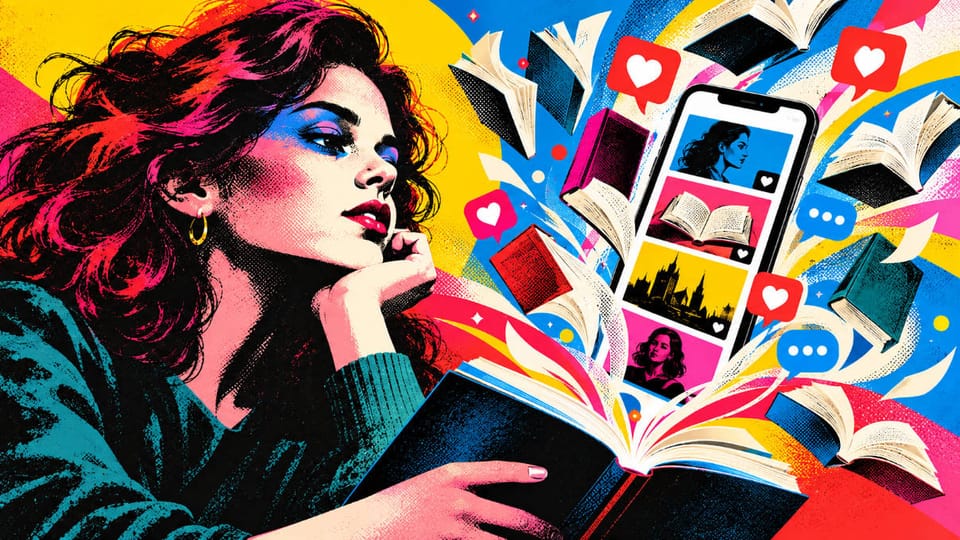
Publishing spent years blaming smartphones for the decline of reading. Then BookTok became one of the industry’s biggest discovery engines. The supposed enemy of books turned out to be one of their strongest sales forces — and exposed how badly publishing had misread young readers.
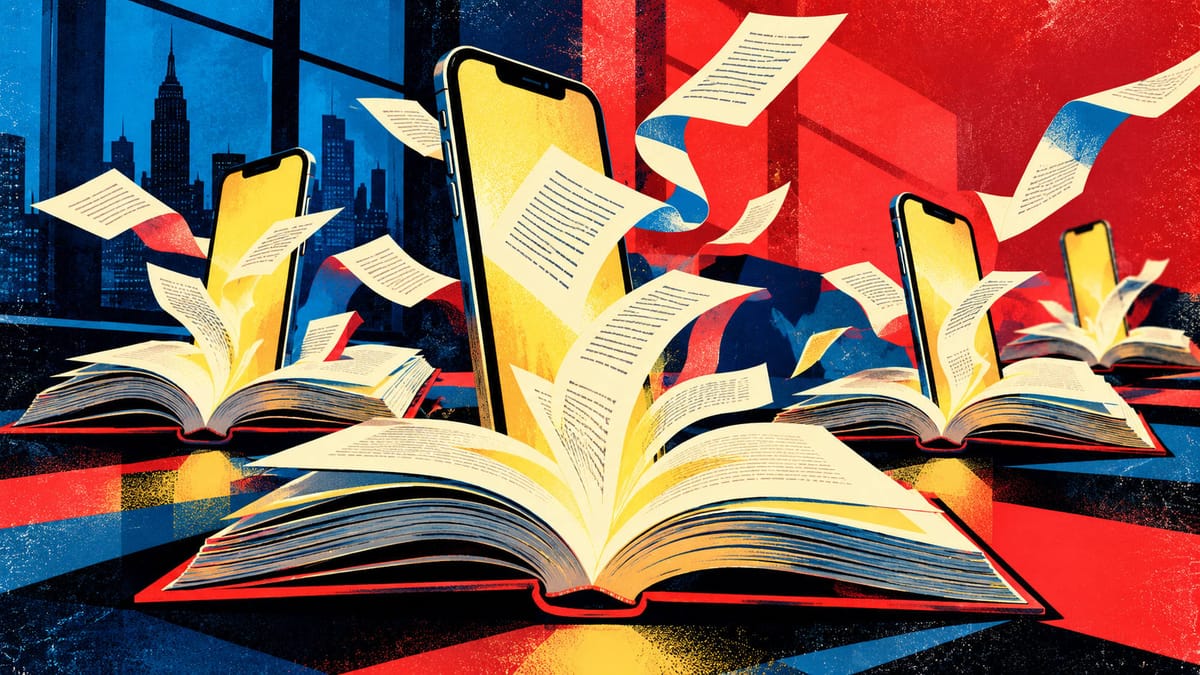
The industry spent years blaming phones for the decline of reading. Now one of the world's most addictive phone apps is sending a generation back into bookstores.
Publishing has spent a remarkable amount of time worrying about young people.
They don’t concentrate.
They don’t read long books.
They live on their phones.
Their attention spans have been destroyed by social media.
The novel, inevitably, is dying.
And then something deeply inconvenient happened.
TikTok began selling books.
Not ebooks.
Not summaries.
Not thirty-second substitutes for literature.
Actual books.
Millions of them.
A platform frequently accused of destroying attention has become one of publishing’s most powerful discovery engines.
Perhaps the problem was never that young people stopped reading.
Perhaps publishing stopped knowing where to find them.
The industry loved the wrong explanation
“People don’t read anymore” is one of publishing’s most convenient sentences.
It explains weak sales without forcing anyone inside the industry to ask harder questions.
Are we publishing the wrong books?
Are we marketing them badly?
Have literary institutions made reading sound like medicine?
Are we speaking to readers — or mostly speaking to ourselves?
If the public simply abandoned books, nobody inside publishing needs to feel responsible.
BookTok shattered that comforting explanation.
Young readers were there all along.
They were discussing characters.
Fighting over endings.
Recommending novels.
Building shelves.
Collecting editions.
Walking into bookstores with lists on their phones.
They simply weren’t waiting for the traditional literary establishment to tell them what mattered.
BookTok made recommendation emotional again
Traditional book marketing has a peculiar vocabulary.
A novel is “important.”
“Timely.”
“Ambitious.”
“Luminous.”
“Essential.”
BookTok tends to be less dignified.
“This destroyed me.”
“I stayed up until 3 a.m.”
“I cannot stop thinking about these characters.”
“Someone else needs to read this immediately.”
As criticism, that may sound unsophisticated.
As an explanation for why human beings read fiction, it is remarkably accurate.
People do not read stories because they are good for them.
They read because stories make them feel things.
Publishing occasionally forgets this because publishing is full of people who spend all day talking about books.
Readers usually don’t.
They talk about love, fear, heartbreak, sex, revenge, friendship, grief and fictional people who briefly made those things feel real.
BookTok restored emotional urgency to book recommendation.
The backlist came alive again
Perhaps the most disruptive part of BookTok has nothing to do with age.
It has to do with time.
Traditional publishing lives by the calendar.
New title.
New season.
New campaign.
New review window.
Then the next book arrives.
A novel may receive six weeks of intense attention and then vanish into the backlist.
Algorithms do not care when a book was published.
Neither do readers who discover it for the first time.
A five-year-old novel can suddenly become culturally new.
A backlist title can behave like a new release.
An adaptation can revive an entire series.
A short video can do what once required months of traditional advertising.
Attention no longer obeys the publication date.
Of course the algorithm has a price
None of this means BookTok is a literary utopia.
Algorithms create conformity as efficiently as they create discovery.
Once something works, the market reproduces it.
Romantasy.
Dark academia.
Hockey romance.
Special editions.
Sprayed edges.
Certain tropes.
Certain emotional beats optimized for clips and reactions.
Publishing has always chased formulas.
The difference now is speed.
The algorithm can turn a niche preference into an industry-wide acquisition strategy almost overnight.
That should worry anyone who values literary variety.
But it does not invalidate what BookTok revealed.
Traditional gatekeepers had their own biases too.
Prestige.
Connections.
Review coverage.
Publisher reputation.
Prize culture.
The new gate is not neutral.
Neither was the old one.
The physical book won too
There is another irony here.
The supposedly terminally digital generation has helped turn printed books into objects of desire.
Covers matter.
Special editions matter.
Design matters.
A shelf itself becomes part of identity.
The smartphone did not necessarily replace the physical book.
In many cases, it became the device that sent readers to buy one.
This should encourage publishers.
It should also humble them.
Young people did not suddenly rediscover reading because the industry perfected its strategy.
Readers created their own infrastructure.
Their own critics.
Their own recommendation networks.
Their own bestseller ecosystem.
Publishing followed.
The biggest lie
BookTok did not prove that every young person secretly wants to read a 700-page novel.
Obviously not.
It proved something more useful.
Attention is not dead.
Enthusiasm is not dead.
Long-form storytelling is not dead.
Young people will still devote hours, days and entire weekends to a story if they believe the experience will be worth it.
The publishing industry’s biggest mistake was confusing failure to reach an audience with the disappearance of the audience itself.
The readers were there all along.
They simply stopped waiting to be told where literature was supposed to happen.