
The Dark Secret Behind Nassau’s Luxury: What Happens Inside Fox Hill
Away from the mega-yachts and turquoise waters of Nassau, a medieval engine of human degradation hums. Discover the brutal reality inside Fox Hill Prison—a state-administered catastrophe of strategic starvation and systemic torture, actively sustained by the machinery of the US government.
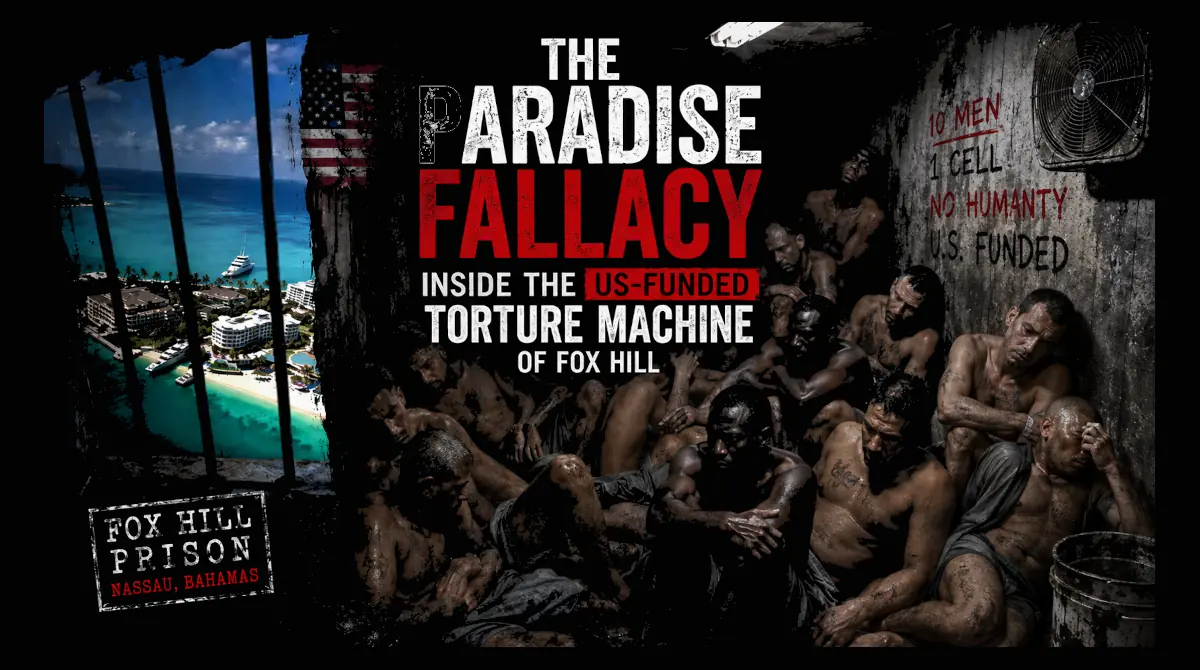
The Paradise Fallacy: Inside the US-Funded Torture Machine of Fox Hill
NASSAU, The Bahamas — The jumbo jets descend over New Providence Island like clockwork, slicing through the heavy, tropical air to deposit thousands of tourists into a postcard. From 30,000 feet, the view is an idyllic canvas of turquoise waters, multi-million-dollar mega-yachts, and the sprawling, air-conditioned luxury of mega-resorts. This is the Bahamas of global marketing—a pristine tax haven and a playground for the world’s financial elite.
But just a few miles inland, away from the cruise ship terminals and the gated communities of Lyford Cay, a fundamentally different kind of machinery hums. It is a world of stagnant heat, decaying concrete, and institutionalized brutality.
This is the Bahamas Department of Correctional Services, universally known by its historical, blood-soaked moniker: Fox Hill Prison.
Fox Hill is not merely an overcrowded penal facility in a small island nation. It is a systematic, state-administered engine of human degradation. More crucially, it is a facility that functions, survives, and locks its iron gates every night because of a dark geopolitical bargain. This is the story of a human rights catastrophe hidden in plain sight—engineered by local political cowardice and actively sustained by the logistical and financial machinery of the United States government.
The Anatomy of Torture: Daily Life in the Concrete Bunker
To understand Fox Hill, one must first shed any Western concept of modern incarceration. This is a medieval holding pen disguised as a twentieth-century facility. Inside the Maximum Security wing, where up to six men are packed into six-by-ten-foot cages built for one, the environment itself is a weapon.
+-----------------------------------------------------------+
|               THE ANATOMY OF MAX-SECURITY TOXICITY       |
+-----------------------------------------------------------+
|                                                           |
|  [ PERMANENT NEON LIGHTS ] -> Chronic Sleep Deprivation   |
|                                                           |
|  [ INDUSTRIAL VENTILATORS ] -> Airplane-Level Noise Lärm  |
|                                                           |
|  [ SLOP BUCKETS ]          -> 24-Hour Human Waste Fumes   |
|                                                           |
|  [ NAKED CONCRETE FLOOR ]  -> Rat-Infested Bedding        |
|                                                           |
+-----------------------------------------------------------+
The torture begins with the senses. Day and night, the cells are flooded with the harsh, flickering glare of permanent overhead neon lighting. There is no darkness, no internal clock, no respite for the optic nerve. The psychological toll is immediate, driving men toward acute psychosis within weeks.
This sensory assault is accompanied by a deafening, non-stop wall of sound. Giant, primitive industrial ventilators roar through the corridors. They mimic the mechanical shriek of a jet engine, vibrating through the concrete floors, yet they fail to move the heavy, humid air. They do not cool; they merely mask the screams and ensure that silence is a luxury no prisoner will ever afford.
Then there is the stench. In Fox Hill, the primitive reality of "slopping out" remains the daily law. Cells lack plumbing. Human waste is collected in open plastic buckets—slop buckets—that sit in the corner of the cramped, unventilated rooms, shared by half a dozen men in 90-degree tropical heat. These buckets are emptied exactly once a day. For the remaining 23 hours, the inmates breathe a toxic mist of their own excrement.
The ultimate monument to this institutional cynicism can be found in the intake and transitional cells. To the casual observer, or perhaps to an international inspector walking through on a guided tour, these cells appear to feature modern ceramic toilets bolted to the walls.
It is a meticulously engineered lie.
These toilets have no plumbing. They are connected to neither water lines nor sewage pipes. They are hollow porcelain illusions, dead decoys meant to check a box on a human rights questionnaire. In practice, they are used exactly like the plastic buckets—dry, unflushable receptacles where waste accumulates on raw ceramic, a physical manifestation of a state-sponsored fraud.
Survival is further rationed through water and bread. In the suffocating heat, hydration is a matter of life and death. Nominally, inmates are given a single gallon of water per day. But this water is never delivered on a predictable schedule; it arrives "anytime," forcing prisoners into an agonizing game of psychological waiting.
+-------------------------------------------------------+
|              THE WEEKEND SUPPLY COLLAPSE               |
+-------------------------------------------------------+
|  Mon - Fri: 1 Gallon of Water (Unpredictable Timing)   |
|                                                       |
|  Sat - Sun: Supply Cuts / Discolored, Brackish Fluid  |
+-------------------------------------------------------+
When the weekend arrives, the system routinely collapses. The water delivery stops, or the fluid running through the corroded pipes turns discolored and brackish, smelling faintly of sulfur and industrial chemicals. The prisoners are trapped in a lethal paradox: refuse the foul water and face heatstroke on the concrete floor, or drink it and unleash violent gastrointestinal infections in a cell with no running water.
Food is distributed with equal malice. Breakfast appears at random intervals; lunch is served hours later, slapped down simultaneously with a meager dinner. The standard fare consists of two slices of dry white bread. On rare occasions, a handful of sandwiches are brought to a cell—but the guards deliberately bring fewer sandwiches than there are men in the cage. The scarcity is intentional. By tossing a fraction of the necessary nutrition into a packed room, the administration outsources its violence, forcing starved, desperate men to fight each other for survival.
The Ritual of Breaking: Chains, Echoes, and the Key Box
The destruction of the human spirit at Fox Hill is a methodical, weekly choreography. Every week, inmates—including those in pre-trial detention who have never been convicted of a crime—are dragged out into the open courtyard.
Here, under the gaze of guards carrying clubs and iron pipes, the men are ordered to strip entirely naked. They are forced to bend over, subjected to invasive body cavities searches in full view of their peers. This ritual has nothing to do with contraband; it is an act of ceremonial castration, designed to strip away the last shred of human dignity before the iron is applied.
Once hollowed out, the men are bound. They are chained together in rigid columns of ten, iron shackles biting into ankles and wrists.
[ Stripping/Cavity Search ] -> [ Chained in Columns of 10 ] -> [ Hours in Solar Heat ] -> [ Seconds-Long Video Court ]
In these heavy chains, they are marched across the yard to bake for hours in the direct Caribbean sun or crammed into the back of a stagnant transport bus. Their destination is a small, hot room equipped with a digital camera. This is the bahamaisches justice system's version of a hearing: a seconds-long video link to a remote magistrate who glares at them from a screen before remanding them back to their cages. The process moves no legal mountains; it is an administrative theater of the absurd, serving only to remind the prisoners of their absolute insignificance before a faceless bureaucracy.
For many, this theater lasts for years. The Bahamian judicial system is paralyzed by backlogs, meaning that individuals presumed innocent under the law rot in Maximum Security alongside convicted murderers for five, six, or seven years waiting for a trial date that never comes.
If the legal system doesn't kill them, the infrastructure might. Fox Hill is an absolute logistical death trap for medical emergencies. The cells feature no call buttons, no intercoms, no emergency alarms. If an inmate suffers a heart attack or a stroke in the middle of the night, his cellmates have only one option: to beat frantically against the iron bars with their bare hands or food tins, screaming into the void. Their cries must compete with the jet-engine roar of the industrial fans.
Even if a guard hears the commotion, the architecture of the prison ensures that help arrives too late. Fox Hill does not use a master key system or electronic overrides. Nearly every single cell is secured by an individual, heavy, manual padlock.
When a man is dying on the floor, an underpaid, indifferent officer must first walk to a central station, locate a massive, chaotic ring of keys, and manually test padlock after padlock in the dim neon light. By the time the correct key turns in the rusted iron, the life inside has long since expired. The prison medical staff are not lifesavers; they are under-funded custodians of mortality, explicitly instructed to preserve their minimal supplies and prescribe virtually nothing.
The reality of this environment is best summarized by the haunting refrain heard from those who have survived its depths: "If I knew what was waiting for me in here, I would have let them shoot me on the street."
The Architecture of Ignorance: PLP, FNM, and Domestic Complicity
This system of calculated cruelty does not exist in a vacuum, nor is it the result of a sudden economic crisis. It is the permanent product of a bipartisan political consensus within Bahamian democracy.
For over half a century, governance in the Bahamas has rotated between two dominant political factions: the Progressive Liberal Party (PLP) and the Free National Movement (FNM). While these parties clash fiercely on the public stage over tourism budgets, infrastructure contracts, and economic policy, they maintain an unspoken, ironclad alliance when it comes to the horrors of Fox Hill: complete and total inaction.
+------------------------------------------------------------+
|             THE BAHAMIAN PARLIAMENTARY CONSENSUS          |
+------------------------------------------------------------+
|  PLP (Progressive Liberal Party)   \  "Hard on Crime"      |
|                                     > Sloganeering         |
|  FNM (Free National Movement)      /  Political Survival   |
+------------------------------------------------------------+
|  RESULT: Decades of zero structural reform at Fox Hill     |
+------------------------------------------------------------+
To the political elites in Nassau, the prisoners of Fox Hill are non-persons. In local electoral politics, advocating for human rights behind bars is considered a form of political suicide. The Bahamian electorate, fatigued by domestic crime rates, is easily manipulated by populist, "hard on crime" rhetoric. Both the PLP and the FNM recognize that spending tax dollars to replace slop buckets with functioning plumbing or providing clean mattresses to inmates would be weaponized by their opponents as being "soft on criminals."
Consequently, millions of dollars earmarked for "prison reform" vanish routinely into the black hole of bureaucratic committees and advisory boards. Ministers from both sides of the aisle give periodic press conferences promising new wings, modern facilities, and the abolition of the bucket system. Yet, when the cameras turn off, the padlocks remain, the Farbeimer stay in the cells, and the budget is quietly redirected to projects that attract tourists or appease wealthy foreign investors. The administrative elite does not view Fox Hill as a problem to be solved; they view it as a necessary trash bin for the human collateral of their society.
The Dirt Economy: How Scarcity Breeds Compliance
Because the state refuses to provide the basic necessities of life, Fox Hill has developed its own feral, internal economy—an economic Darwinism engineered by the administration to control the population without firing a shot.
In a place where the state provides nothing, industrial waste becomes gold. The most valuable commodity in a Max-Security cell is an empty plastic container—usually an old, discarded industrial paint bucket (Farbeimer). This is not trash; it is a lifeline. If an inmate wants to wash the tropical sweat, grime, and fecal dust from his skin, he cannot simply turn on a tap. He must possess a secondary bucket to hold clean wash water.
But these paint buckets are not issued; they must be conquered. They are bought from corrupt guards for exorbitant prices, smuggled across the compounds, or won through raw physical violence.
         [ State Limits Basic Supplies ]
                       │
                       ▼
      [ Creates Artifical Scarcity of Goods ]
                       │
                       ▼
    [ Prisoners Fight Each Other for Paint Buckets ]
                       │
                       ▼
 [ System Controls Itself Through Internal Warfare ]
A prisoner without money, family connections on the outside, or brute physical strength is condemned to absolute filth. He is forced to live covered in his own sweat, sleeping on raw concrete, watching those with power utilize old commercial containers as symbols of elite status.
The guards, carrying their iron rods, rarely need to implement mass discipline. The systemic deprivation of basic goods—sandwiches, clean water, plastic buckets—creates a permanent state of low-intensity civil war inside the cells. By keeping the inmates locked in an endless, primal struggle against one another for the scraps of survival, the prison administration ensures that the inmates are too exhausted, too divided, and too broken to ever unite or rebel against their captors.
The Washington Connection: Geopolitical Hypocrisy on the High Seas
The ultimate betrayal of the men dying inside Fox Hill, however, does not originate in Nassau. It comes from 180 miles to the west: from Washington, D.C.
Every year, the United States Department of State publishes its highly detailed, legally mandated Country Reports on Human Rights Practices. And every year, the section on the Bahamas reads like a horror novel. American diplomats meticulously document the "harsh and life-threatening" conditions at Fox Hill. They write academic prose about the lack of medical care, the rodent infestations, the use of slop buckets, and the unconstitutional delays in pre-trial detention. Washington proudly prints these reports, framing itself as the global arbiter of moral decency and human rights.
But follow the money, and the mask slips.
While the State Department deplores Fox Hill in print, other arms of the US government—specifically the Bureau of International Narcotics and Law Enforcement Affairs (INL) and the Caribbean Basin Security Initiative (CBSI)—are actively writing checks to keep the facility operational.
+----------------------------------------------------------------+
|                   THE CO-DEPENDENT CARIBBEAN PIPELINE          |
+----------------------------------------------------------------+
|  [ Washington, D.C. ] ─── Funds, Vehicles, Tech ───► [ Nassau ] |
|                                                                |
|  [ US Coast Guard ]   ◄─── Stops Migrants/Drugs ◄─── [ Fox Hill ]|
+----------------------------------------------------------------+
The United States government regularly donates tactical gear, communication systems, surveillance technology, and transport vehicles to the Bahamian correctional system. The very buses in which shackled U-Häftlinge sit baking in the sun for hours before their meaningless video hearings are often shiny, late-model vehicles stamped with the invisible seal of American taxpayer funding. Furthermore, US prison officials from various state jurisdictions regularly fly to New Providence to conduct training seminars for Bahamian guards, providing professional logistics to a system built on iron pipes and padlocks.
Why does the United States underwrite a torture chamber? The answer is a cold, cynical calculation of border security.
The Bahamas is a geographical arrow aimed directly at the heart of Florida. Its vast archipelago is a prime transit zone for the international drug trade and maritime human smuggling pipelines moving toward the American mainland. Washington’s highest priority in the region is not the preservation of human rights; it is the enforcement of a maritime border wall.
The geopolitical deal between Washington and Nassau is simple, brutal, and unwritten:
- The Bahamas acts as America’s forward border guard. Its defense forces and police intercept Haitian and Cuban migrants, lock up drug runners, and prevent the desperate and the criminal from ever reaching the shores of Palm Beach or Miami.
- In return, the United States provides the material infrastructure necessary to hold these populations. Washington supplies the chains, the transport, and the security systems needed to contain the threat.
As long as the Bahamian government keeps the gates of Fox Hill locked and prevents the fallout of regional instability from touching American soil, Washington is perfectly content to publish its toothless annual reports, deliver another fleet of transport buses, and look the other way while men rot on the concrete.
Conclusion: The Porcelain Mask of the West
The eiskalt, air-conditioned VIP areas of Fox Hill—the ones featuring functional plumbing and clean floors, occasionally shown off to select visitors—are the perfect metaphor for Western foreign policy in the Caribbean. They form a sterile, civilized mask designed to look respectable under the glare of international scrutiny.
But behind that mask lies the true face of Fox Hill: a dark, stinking room where an unconvicted man sits on bare concrete, holding a dirty paint bucket, waiting for a drop of water that might make him sick, while an American-funded prison bus idles in the yard outside.
Fox Hill is not a failure of the system. It is the system. It is a joint venture in human cruelty managed by Bahamian political apathy and co-financed by American imperial interest. Until the international community pulls back the curtain on this paradise fallacy and demands an end to the funding of this machinery, the screams of the dying will continue to be swallowed by the roar of the fans, just a few miles down the road from the beach.
Fox Hill Prison, Nassau Bahamas, Human Rights Violations, Caribbean Basin Security Initiative, US Foreign Policy Hypocrisy, Pre-trial Detention Crisis, Bahamas Department of Correctional Services, Prison Reform Failure