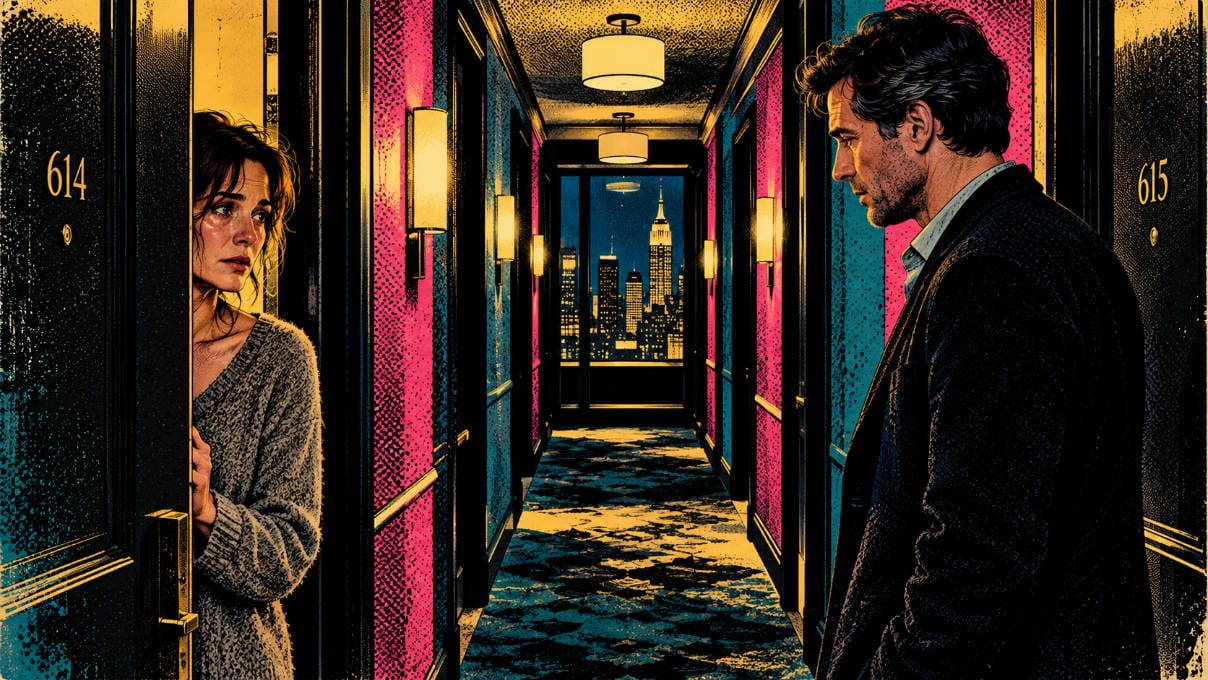
The Man Who Came Back in September
After eleven years abroad, Daniel Mercer returns to the city he fled after a young man’s unexplained death. He brings one suitcase, an old secret and evidence that could reopen a case everyone else has learned to live with.
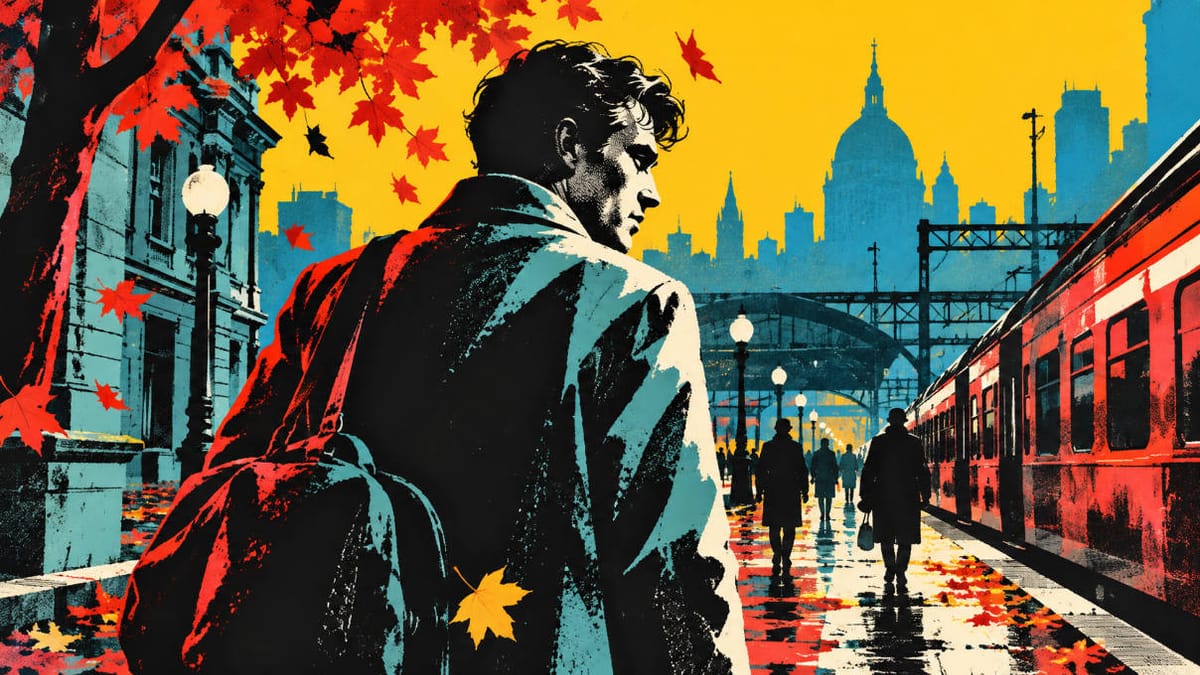
He had been gone for eleven years. Then, on the first cold evening of September, Daniel Mercer stepped off the train carrying one suitcase and a past nobody in the city had forgotten.
The train arrived six minutes late.
Nobody on Platform Four cared.
It was one of those September evenings that had already abandoned summer without quite admitting it. The rain had stopped ten minutes earlier, but the station roof still clicked and dripped, and the concrete shone under the lamps like black glass.
Daniel Mercer stood in the doorway of the last carriage and did not move.
For a few seconds, he simply looked.
Eleven years.
That was how long it had been since he had seen the station.
The old clock was still there above the ticket hall, three minutes slow. The newspaper kiosk had become a coffee stand. The benches had been replaced with steel ones designed, apparently, to discourage anyone from sitting comfortably for more than five minutes.
Beyond the glass roof, the city skyline had changed.
Two new towers.
A hotel where the printing works used to be.
And the church steeple, still rising behind everything as if it had been given an exemption from time.
“Sir?”
The conductor stood behind him.
Daniel looked back.
“Sorry.”
He stepped onto the platform.
One suitcase.
Dark coat.
Grey at the temples now.
Nobody waiting.
Exactly as he had arranged it.
1
He walked rather than taking a taxi.
The rain had sharpened the air. Autumn leaves were already gathering along the gutters, red and yellow against the wet pavement.
He passed the bakery on Hanover Street.
Still there.
Different name.
Same windows.
The cinema had become apartments.
The old police station was now a gym.
And beside it, absurdly, the flower shop remained exactly where it had always been.
Daniel stopped.
He remembered buying lilies there.
White ones.
September 14, 2015.
He remembered carrying them three streets to St. Martin’s.
He remembered the church doors.
The people outside.
The cameras.
He remembered not going in.
Then he remembered leaving the city the following morning.
A bus at 6:10.
No suitcase then.
Just a backpack.
He continued walking.
2
The hotel receptionist looked at his passport for too long.
Daniel noticed.
“Mr. Mercer?”
“Yes.”
The young man looked up.
“You used to live here?”
Daniel almost smiled.
“Apparently.”
The receptionist laughed politely, uncertain whether it had been a joke.
“Room 512. Breakfast from six-thirty.”
“Thank you.”
The elevator mirror was unkind.
Daniel studied himself anyway.
He had imagined this return many times.
In some versions he looked stronger.
In others, older.
In one, ridiculous now, he imagined walking back into the city untouched by time, as though eleven years had happened only to everybody else.
Instead, he looked exactly like what he was.
Forty-three years old.
Tired.
Well dressed.
Afraid.
The elevator doors opened.
3
At nine that night, he called Claire.
He had rehearsed the sentence for three weeks.
When she answered, he forgot it.
“Hello?”
Her voice had changed less than he expected.
Daniel said nothing.
“Hello?”
“Claire.”
Silence.
Not confusion.
Recognition.
That was worse.
Finally she said, “Where are you?”
“Here.”
Another silence.
“In the city?”
“Yes.”
“When?”
“Tonight.”
She breathed out.
Daniel could hear something in the background. A television. A man talking. Then suddenly nothing.
She had turned it off.
“Why?”
“I need to see you.”
“No.”
“Claire.”
“No.”
“I didn’t come back to cause trouble.”
She laughed once.
There was no humor in it.
“That is exactly what you said before you left.”
Daniel closed his eyes.
“I know.”
“You don’t get to come back after eleven years and say you need to see me.”
“I know.”
“No, you don’t.”
“I know what I did.”
“Do you?”
He did not answer.
Her voice lowered.
“Are you staying?”
“For a few days.”
“That wasn’t what I asked.”
Daniel looked through the hotel window.
Five floors below, taxis moved through the rain.
“I don’t know.”
Claire said, “Then go back.”
The line went dead.
4
The following morning, Daniel walked to Richmond Street.
He did not intend to.
At least that was what he told himself.
Yet by ten o’clock he stood across from number 27, hands in his coat pockets, watching a woman unload groceries from a car.
Not Claire.
The house had been painted blue.
It used to be cream.
There was a bicycle against the wall.
A child’s bicycle.
Daniel turned away.
“You always were bad at hiding.”
He stopped.
The voice came from behind him.
An old man sat outside the café on the corner.
Daniel stared.
“Mr. Hall.”
Edward Hall lifted his coffee cup.
“Still Mr. Hall after all these years?”
Daniel walked over.
Edward was thinner. Much thinner. White hair now, but the same sharp eyes.
“You look terrible,” Edward said.
“So do you.”
“Good. Sit down.”
Daniel sat.
Edward studied him for several seconds.
“So.”
“So.”
“You finally ran out of places to hide.”
Daniel looked toward the house.
“I wasn’t hiding.”
“No?”
“No.”
Edward nodded.
“Then I suppose South Africa, Argentina, Singapore and God knows where else were all very inconveniently located.”
Daniel looked back at him.
“You followed me?”
“No. Claire did.”
That hurt more than he expected.
“She knew where I was?”
“Most of the time.”
“She never contacted me.”
“Why would she?”
Daniel had no answer.
Edward stirred his coffee.
“She married.”
Daniel had known.
He had seen the photograph online six years earlier.
Claire in a white dress.
A man named Martin Bell.
Architect.
Two children.
The information had remained in his mind with absurd precision.
“I know.”
“She has a good life.”
“I know.”
“Then leave it alone.”
Daniel looked at him.
“That isn’t why I came.”
Edward’s eyes narrowed.
“Then why did you?”
Daniel reached inside his coat.
He placed an envelope on the table.
Edward did not touch it.
“What is that?”
“What I should have brought eleven years ago.”
5
Edward opened the envelope.
Inside was a photograph.
A receipt.
And a letter.
The photograph had been taken at night.
A car park.
A black sedan.
Two men.
One was Daniel.
The other was Jonathan Reed.
Claire’s brother.
Edward looked at the photograph for a long time.
Then he picked up the receipt.
Petrol station.
2:13 a.m.
September 13, 2015.
The night Jonathan died.
“You told the police you were home,” Edward said.
“Yes.”
“You told Claire the same thing.”
“Yes.”
Edward looked up.
“Were you with him?”
Daniel nodded.
Edward’s fingers tightened around the photograph.
“Then why the hell did you say nothing?”
“Because Jonathan asked me not to.”
“Jonathan was dead.”
“I know.”
“Dead men don’t ask for favors.”
“He did before he died.”
Edward stared at him.
Daniel continued.
“He was scared.”
“Of what?”
“Not what. Who.”
Edward leaned back.
The street moved around them.
People passing.
Coffee cups.
Traffic.
Ordinary life.
Daniel lowered his voice.
“He had found something.”
“What?”
“Money.”
Edward frowned.
“Money?”
“Accounts. Payments. Contracts. He thought someone in the council was taking kickbacks.”
Edward said nothing.
“He called me that night. Told me to meet him at the old freight yard. He gave me documents. Told me if anything happened to him, I should take them to the police.”
“But you didn’t.”
“No.”
“Why?”
Daniel looked at the envelope.
“Because the man he said was involved was a police officer.”
Edward went still.
6
The official version of Jonathan Reed’s death had survived eleven years.
Drunk driver.
Hit-and-run.
No arrest.
No witnesses.
A tragedy.
That was the word newspapers used when nobody could explain anything.
Tragedy.
Daniel had known better.
He had known from the moment Claire called him at seven the next morning.
Jonathan was dead.
And by noon, Detective Mark Vale was standing in Daniel’s kitchen asking where he had been during the night.
Vale.
The same name Jonathan had written in the documents.
Daniel had lied.
He had said he was home.
He had understood what Jonathan had been trying to tell him.
And he had been terrified.
“That afternoon,” Daniel told Edward, “someone came into my flat.”
“Police?”
“I don’t know.”
“Were the documents there?”
“No. I had hidden them.”
“Where?”
Daniel almost smiled.
“Somewhere stupid.”
“Where?”
“The church.”
Edward blinked.
“St. Martin’s?”
“In the organ loft.”
For the first time, Edward laughed.
“You’re joking.”
“I wish I were.”
“Are they still there?”
“No.”
“When did you get them?”
“Yesterday.”
Edward stopped smiling.
“You went into the church?”
“This morning.”
“And after eleven years they were still there?”
Daniel nodded.
“Nobody looks inside an abandoned organ pipe.”
Edward looked toward Richmond Street.
“Why now?”
Daniel took a long time to answer.
“Because Vale died.”
“When?”
“Three weeks ago.”
Edward’s face changed.
“How?”
“Heart attack.”
“You came back because he died?”
“Partly.”
“What’s the other part?”
Daniel looked at him.
“I’m tired.”
7
Claire agreed to meet him at four.
Not at her house.
Not at the hotel.
A café near the river.
Public.
Neutral.
She arrived twelve minutes late.
Daniel stood automatically.
She stopped beside the table.
“Don’t.”
He sat again.
Claire looked older.
Of course she did.
But it was not age he noticed first.
It was certainty.
At thirty she had always seemed to be deciding whether she belonged in the room.
At forty-one, she simply did.
She sat opposite him.
“You have twenty minutes.”
Daniel nodded.
He put the envelope on the table.
Claire did not look at it.
“Edward called me.”
“I know.”
“He told me about Jonathan.”
Daniel said nothing.
“Is it true?”
“Yes.”
“You saw him that night?”
“Yes.”
Her face remained calm.
That frightened him more than anger would have.
“You watched me bury my brother.”
“I know.”
“You stood outside the church.”
“Yes.”
“And the next morning you disappeared.”
“Yes.”
Claire leaned forward.
“Why didn’t you tell me?”
“Because I thought they would come after you.”
“That wasn’t your decision.”
“I know.”
“You keep saying that.”
“Because it’s true.”
“No. It’s convenient.”
Daniel looked down.
She was right.
Of course she was right.
“I was frightened,” he said.
Claire waited.
“That’s the truth. Everything else I told myself afterward—the danger, protecting you, Jonathan’s request—it became a way of making fear sound noble.”
Claire looked at him for a long time.
Then she finally picked up the photograph.
Her hand trembled once.
Only once.
8
“What happens now?” she asked.
“I give everything to the prosecutor.”
“You trust them?”
“No.”
“Then why?”
“Because hiding it was wrong.”
“That didn’t answer me.”
Daniel looked toward the river.
“Because I don’t want to carry it anymore.”
Claire put the photograph down.
“And you think that makes you brave?”
“No.”
“Good.”
She stood.
Daniel looked up.
“Claire.”
She paused.
“I’m sorry.”
Her expression did not change.
“I believe you.”
For one hopeful second, he misunderstood.
Then she said:
“But forgiveness and belief are not the same thing.”
She left.
Daniel remained at the table.
Twenty minutes exactly.
9
He delivered the documents at 5:37 p.m.
The prosecutor’s office occupied three floors of a building that had once been a department store.
A security officer took his phone.
A clerk gave him a number.
He waited forty minutes.
Then two investigators came downstairs.
Daniel told them his name.
One of them knew it.
Of course he did.
By seven-thirty, Daniel was in an interview room.
By nine, there were four people in it.
At ten-fifteen, someone brought coffee.
At midnight, they asked him why he had waited eleven years.
Daniel gave the answer he had finally learned to stop decorating.
“Because I was afraid.”
They wrote it down.
10
He returned to the hotel after two in the morning.
There was a message waiting.
Claire.
Three words.
Don’t leave yet.
Daniel sat on the edge of the bed.
He read it again.
Then again.
Not forgiveness.
Not welcome.
Not love.
Three words.
That was all.
For eleven years, Daniel Mercer had imagined that returning would mean recovering something.
His old life.
His old city.
Claire.
Perhaps even himself.
He understood now that return did not work that way.
Nothing waited exactly where you had left it.
People moved.
Cities changed.
Grief hardened.
Love learned other addresses.
The past did not reopen because you finally found the courage to knock.
But sometimes, if you came back without demanding what you had lost, a door remained unlocked.
Not open.
Unlocked.
Outside, September rain began again.
Daniel crossed to the window.
The city below him shimmered black and gold.
For the first time in eleven years, he did not know where he would be the following week.
And for the first time, that did not feel like running.