The Missing Manual for Cross-Border Chaos
When global projects reach a boiling point, standard cultural charts fall short. Michael Kirschberger’s "The Human Map" bridges the gap, offering a hyper-practical, psychology-driven field guide to reading hidden dynamics, earning rapid trust, and leading cross-border teams through chaos.
Why cultural theory fails when the pressure is on, and how a new framework aims to fix it.
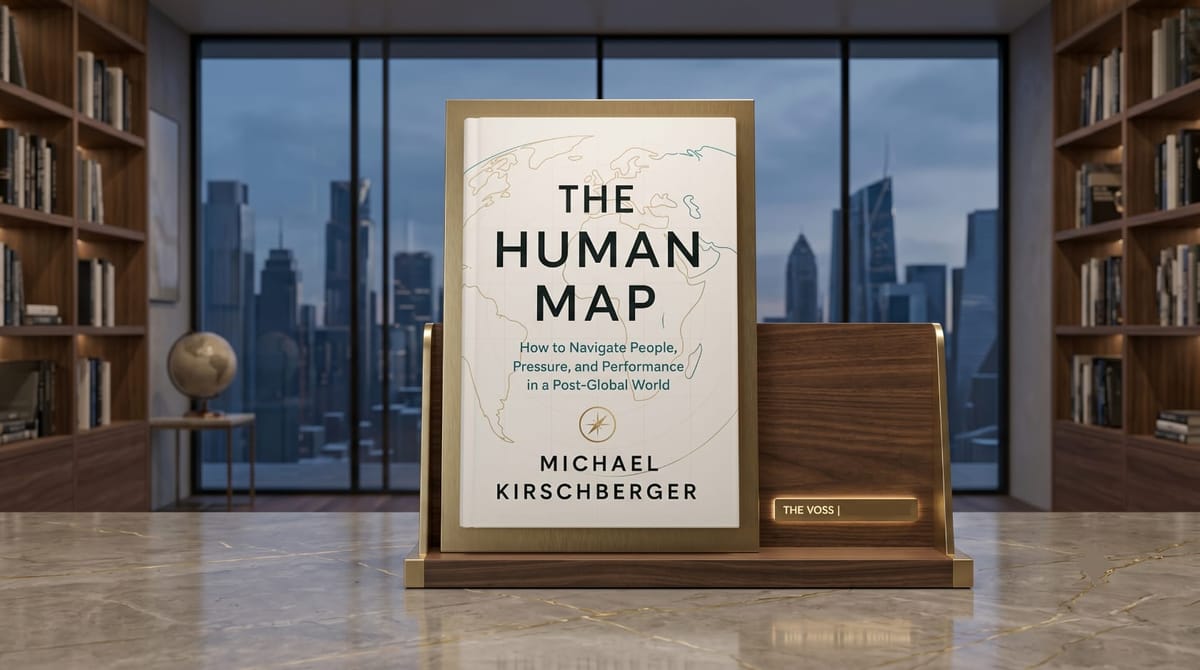
THE HUMAN MAP: How to Navigate People and Pressure in Global Teams By Michael Kirschberger
Erin Meyer’s The Culture Map has long been the gold standard for executives trying to decode why their French colleagues are so argumentative or why their Japanese partners hesitate to say "no." It is an elegant, high-altitude view of national traits. But what happens when you land in the middle of a high-stakes crisis project, the deadline is in twelve hours, and the elegant charts don’t tell you why your local team has suddenly gone completely silent?
That is the tactical gap Michael Kirschberger aims to fill in The Human Map: How to Navigate People and Pressure in Global Teams. Kirschberger, drawing from the high-octane worlds of NGO missions, humanitarian operations, and volatile international business projects, argues that while national culture matters, evolutionary psychology and human survival instincts matter more when the heat is turned up.
"When you land in a new country, a new team, or a crisis project, the hardest part isn’t the task — it’s the people, the hidden dynamics, and the silence between words."
Beyond Theory: The Tactical Reality of Leadership
Kirschberger’s premise is simple yet profound: under extreme pressure, human beings regress to universal, evolutionary survival mechanisms. Standard cultural training tells you what the norms are; The Human Map provides the concrete protocols for how to react when those norms shatter.
The strength of this book lies in its hyper-practicality, structured around what the author calls Core Building Blocks. Rather than offering dry academic analysis, Kirschberger delivers actionable blueprints for leaders who need to deliver results immediately:
- The 72-Hour Rule: A highly structured protocol designed for rapid orientation when dropping into an entirely new ecosystem, allowing leaders to read the field fast before making critical decisions.
- The Three-Circle Scan: A tactical mapping tool used to identify the real decision-makers, informal power structures, and hidden networks that never appear on an official organizational chart.
- The Five-Minute Reset: A psychological tool focused on emotional control and self-regulation, ensuring leaders can project clarity when everyone else is panicking.
Authentic Connection in a Fractured World
Where The Human Map truly shines is in its approach to communication. Kirschberger doesn’t advise managers to corporate-speak or chameleon their way through foreign assignments. Instead, he focuses on bridging the gap between direct and indirect communication cultures with radical authenticity. It’s about finding the universal human element beneath the cultural conditioning.
For anyone who has ever felt stranded between cultural theory and the messy reality of global teamwork, this book is an indispensable field guide. It is less about observing differences and more about surviving—and thriving—together in the trenches.
Global Flows, Perspectives, Identity & Culture
Are you ready to map your team's hidden dynamics? If you are looking for specific strategies to implement the 72-Hour Rule within your current global project, let me know what specific challenges your team is facing.
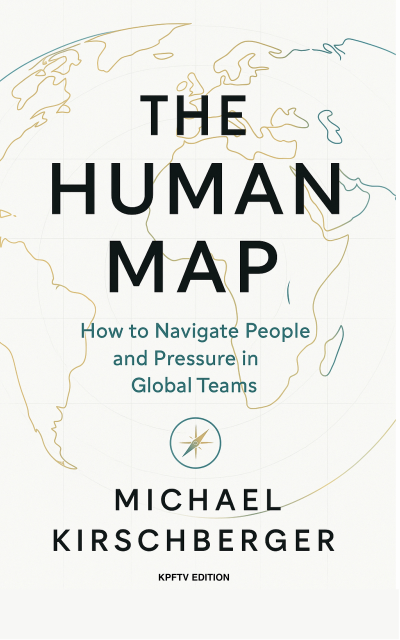
THE HUMAN MAP: How to Navigate People and Pressure in Global Teams
Going Beyond the Culture Map While Erin Meyer’s The Culture Map provides a brilliant framework for understanding national cultural differences, Michael Kirschberger’s THE HUMAN MAP goes one step deeper.