Caribbean & Africa: How Post-Colonial Elites Loot States
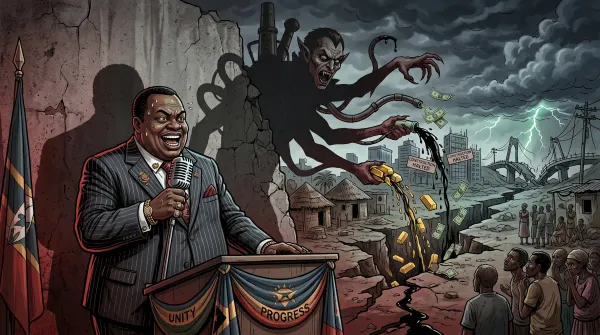
The systematic plundering of sovereign nations across Africa and the Caribbean by their own ruling elites has hijacked the legacy of independence. By diverting public wealth into offshore accounts and leveraging international aid, these modern kleptocrats have cemented a brutal system of injustice.

The Inherited Machine – How Independence Was Hijacked
For decades, the standard historical narrative across the Caribbean and the African continent has focused heavily on the deep, enduring scars left behind by European colonial powers. While those historical wounds are undeniably real, a modern, equally destructive phenomenon has taken root from within: the systematic plundering of sovereign nations by their own post-colonial ruling elites.
The tragic irony of the great 20th-century independence movements across these regions is that the infrastructure of oppression was rarely dismantled; it was merely inherited. Today's ruling classes frequently utilize the exact same centralized, bureaucratic levers once designed by colonial governors to extract resources, suppress dissent, and concentrate wealth.
Instead of building robust, accountable democratic institutions, many contemporary leaders simply took over the controls of the extraction machine, steering public wealth directly into private hands while leaving their populations to bear the cost.
The Architecture of Extraction – From Angola to the Bahamas
To understand how this internal looting works, one must look past the political rhetoric and examine the specific networks that move billions out of local economies. The mechanism relies on institutional capture, where vital state sectors—from oil and mining to tourism and state-run lotteries—are treated as family fiefdoms.
The African Textbook: Petro-Elites and Mining Dynasties
On the African continent, resource wealth has consistently become the primary funding source for entrenched regimes. For decades, Angola served as a textbook example of this dynamic under the multi-decade rule of José Eduardo dos Santos. His daughter, Isabel dos Santos, famously became Africa’s richest woman by acquiring lucrative stakes in the state telecom provider Unitel and the state oil company, Sonangol. Through a complex web of shell companies stretching from Malta to Lisbon, hundreds of millions in state-backed funds were siphoned into private offshore assets while the vast majority of Angolans lived without reliable clean water or electricity.
A similar pattern of institutional capture played out in South Africa during the Jacob Zuma presidency, crystallized in the concept of "State Capture." The notorious Gupta family—three brothers who immigrated from India—systematically infiltrated the highest levels of government. By compromised appointments within the state energy utility Eskom and the transport network Transnet, they diverted multi-billion-dollar state contracts directly into their corporate empire, effectively rendering public oversight toothless.
The Caribbean Pipeline: Offshore Havens and Passport Sales
In the Caribbean, where massive oil fields are rare (with the notable exception of Trinidad and Tobago and the massive recent offshore discoveries in Guyana), the extraction methods shift toward financial maneuvers, real estate speculation, and the commercialization of state sovereignty.
- The Citizenship by Investment (CBI) Schemes: In nations like St. Kitts & Nevis, Antigua & Barbuda, and Dominica, governments have turned the sale of citizenship and passports into a primary revenue stream. While heavily marketed as a tool for national development, these programs have frequently operated under a cloud of opacity. In Dominica, Prime Minister Roosevelt Skerrit’s administration has faced intense domestic and international scrutiny over the lack of transparency regarding where hundreds of millions in CBI funds actually end up, with opposition figures alleging that the capital routinely bypasses the official treasury to fund political patronage networks.
- The Bahamian Real Estate Siphon: In The Bahamas, the wealth gap is exacerbated not through direct asset theft, but through the deliberate manipulation of land policy and tax structures by a deeply entrenched political elite. The country's regressive tax system—relying heavily on Value Added Tax (VAT) and import duties rather than income or corporate taxes—places the tax burden squarely on the local working class. Meanwhile, elite-connected developers and politicians facilitate massive foreign luxury real estate projects in enclaves like New Providence and Lyford Cay, capturing lucrative legal, consulting, and brokerage fees through front companies, while public infrastructure in the Outer Islands remains severely underfunded.
The Genesis of the Syndicate – The Cartel Era and the Legacy of Pindling
To fully map the pipeline of Caribbean corruption, one must look directly at the blueprint laid down during the late 20th century. The system of institutional capture described in the previous section did not emerge in a vacuum; its foundations were built when regional leadership realized that state sovereignty could be monetized as a shield for international criminal enterprises.
The Architect of the Payoff: Sir Lynden Pindling
No figure embodies this transition more completely than Sir Lynden Pindling, widely revered by political loyalists as the "Father of the Nation" for leading The Bahamas to independence in 1973. Behind the public veneer of liberation politics lay one of the most sophisticated state-sanctioned extraction systems of the Cold War era.
By the late 1970s and early 1980s, the emergence of the Colombian drug cartels offered an unprecedented source of untraceable liquidity. Under the Pindling administration, the Bahamian archipelago was effectively transformed into a massive, sovereign transshipment zone for the Medellín Cartel.
- The Norman’s Cay Fiefdom: With the absolute compliance of local authorities, cartel co-founder Carlos Lehder purchased and seized entire tracts of Norman's Cay in the Exumas. Armed guards, radar installations, and a private runway operated openly, funneled billions of dollars worth of cocaine directly into the United States.
- The 1984 Commission of Inquiry: Following explosive investigative reporting by US media, immense international pressure forced the creation of a Royal Commission of Inquiry in 1983. The findings were staggering: a forensic audit of Pindling’s personal finances revealed that between 1977 and 1984, the Prime Minister and his wife had deposited at least $57.3 million in cash—spending more than eight times his official reported government earnings.
The Permanent Blueprint
Though high-ranking cabinet ministers resigned and lower-level officials faced consequences, Pindling himself managed to politically survive the scandal, avoiding prosecution and remaining in power until 1992.
The true damage of the Pindling era was not just the volume of cash siphoned, but the normalization of a corrupt elite class. He proved to a generation of regional politicians that if you wrap yourself tightly enough in the flag of post-colonial liberation and populist rhetoric, the local population will tolerate astronomical levels of personal enrichment.
This historic playbook—using national sovereignty as a shield to monetize access for external actors while systematically underfunding the domestic working class—remains the active operating system for modern kleptocrats across both sides of the Atlantic.
The Western Enablers – Laundering Sovereign Wealth in Miami and London
The systematic plundering of sovereign nations across Africa and the Caribbean could not function in isolation. While the raw extraction of wealth takes place in Luanda, Nassau, or Roseau, the long-term preservation of that wealth relies entirely on the sophisticated financial architectures of the West. Post-colonial elites do not keep their millions in local banks; they funnel them directly into the safe, legally protected asset classes of the Global North.
The Real Estate Pipeline: From the Bahamas to Brickell
For Caribbean kleptocrats and politically exposed persons (PEPs), South Florida—specifically Miami and Fort Lauderdale—serves as the premier destination for laundering illicit capital. The mechanism relies heavily on the deliberate use of opaque corporate structures, shell companies, and real estate transactions.
- Opaque LLCs: Using Florida or Delaware LLCs that shield the true identity of the beneficial owner, elite-connected actors purchase luxury high-rise condominiums in Miami's Brickell financial district or waterfront estates along Fort Lauderdale's New River canals.
- The Role of Gatekeepers: This real estate pipeline is kept open by an army of Western gatekeepers—wealth managers, luxury real estate brokers, and corporate attorneys—who frequently exploit regulatory loopholes in anti-money laundering (AML) frameworks, turning a blind eye to the true origin of the funds.
The "London Laundromat" and the Offshore Web
While Florida handles the Western Hemisphere’s elite capital, London acts as the supreme clearinghouse for stolen African wealth. Dubbed the "London Laundromat," the UK property market has long been a repository for billions siphoned from resource-rich African nations by ruling dynasties.
This pipeline is seamlessly integrated with British Overseas Territories and Crown Dependencies—such as the British Virgin Islands (BVI), Cayman Islands, and Jersey. These jurisdictions provide the essential legal infrastructure of secrecy. A state contract inflated by a corrupt minister in Nigeria or Zimbabwe can be paid directly to a BVI shell company, which is owned by a discretionary trust in Jersey, which ultimately purchases a multi-million-pound mansion in Belgravia.
By allowing these parallel financial universes to coexist, Western financial centers actively subsidize the domestic destruction of post-colonial states. The ultimate tragedy of this system is that the very wealth extracted from the public funds of developing countries is used to bid up real estate prices in the West, safely out of reach of the citizens to whom it rightfully belongs.
The Human Toll and the Collapse of Post-Colonial Sovereignty
The endgame of institutionalized kleptocracy is not merely economic stagnation; it is the total unraveling of the social contract. When the ruling class treats the state budget as a personal bank account, the institutions meant to protect and uplift the populace inevitably rot from within. Across both the African continent and the Caribbean, the physical and societal consequences of this internal extraction are undeniable.
The Collapse of Public Infrastructure
The most immediate, visible metric of systemic looting is the state of public infrastructure. In nations where billions are funneled into offshore real estate or private security details for politicians, basic public utilities are left to decay:
- The Health and Education Deficit: Public hospitals frequently lack basic medical supplies, reliable electricity, and life-saving equipment, forcing everyday citizens to survive in a permanent state of crisis. Meanwhile, the political elites who orchestrate this underfunding routinely fly to private clinics in Western Europe or South Florida for their own medical needs.
- Economic Stagnation: Roads, ports, and power grids remain crumbling or unfinished, sabotaging local entrepreneurship and keeping domestic economies heavily dependent on volatile foreign industries like tourism or raw material extraction.
The Brain Drain and Judicial Weaponization
To protect their extraction pipelines, modern post-colonial elites must systematically neutralize any internal opposition. This is achieved by weaponizing the judiciary and capturing independent media outlets to ensure absolute impunity.
When domestic anti-corruption activists, investigative journalists, or whistleblowers attempt to expose these networks, they face state-sanctioned legal harassment, financial ruin, or physical violence.
The ultimate casualty of this systemic corruption is the loss of human capital. Recognizing that merit and hard work mean nothing in a system ruled by political nepotism and kleptocratic cartels, the brightest young minds—doctors, engineers, scholars, and entrepreneurs—flee their homelands in droves. This massive "brain drain" ensures that the domestic population is stripped of the very talent needed to challenge the status quo, effectively trapping these nations in a perpetual cycle of dependency and decline.
Conclusion: Dismantling the Shield
To truly understand the modern crises facing developing nations across the Caribbean and Africa, the analytical lens must shift. Continuing to view these regions solely through the lens of historical external exploitation is no longer just inaccurate; it actively serves the interests of the corrupt ruling class.
The rhetoric of post-colonial liberation has been weaponized as a permanent shield to deflect from egregious governance failures and criminal self-enrichment. Real sovereignty cannot be achieved until the citizens of these nations are empowered to hold their own leaders to account. The most immediate threat to the future of these regions no longer comes from foreign gunboats or imperial governors, but from within the air-conditioned halls of their own parliaments.
The Aid Illusion – Financing the Oppression
The final, and perhaps most insidious, pillar sustaining this global extraction network is the continuous influx of international development aid, foreign assistance, and state-backed loans. Intended to alleviate poverty and build infrastructure, these massive capital injections frequently achieve the exact opposite outcome in a kleptocratic environment.
In a system where accountability has been thoroughly dismantled, foreign aid functions not as a lifeline for the poor, but as a massive subsidy for the ruling elite.
- The Replacement Effect: When international NGOs and foreign governments step in to fund basic public services like healthcare, rural education, or clean water access, they inadvertently relieve the domestic regime of its fundamental responsibilities. The state’s actual revenues—derived from natural resources, local taxes, or national industries—are then completely freed up to be diverted into offshore shell companies, luxury real estate in South Florida, or political patronage networks.
- Debt as a Weapon: Multi-million-dollar loans from global financial institutions or foreign superpowers saddle the local population with immense sovereign debt that future generations must pay back. Meanwhile, a significant portion of those funds is routinely lost to inflated state contracts, kickbacks, and elite corruption during the execution of large-scale projects.
Ultimately, well-meaning Western interventions fail because they treat systemic corruption as a technical problem rather than an intentional political strategy. By continuously injecting liquidity into a captured state apparatus without enforcing absolute transparency and structural reform, international actors do not solve the crisis—they bankroll it. Every dollar of development aid, every foreign support package, and every sovereign loan does not liberate the population; it only further cements the system of injustice.
Written by
Read next
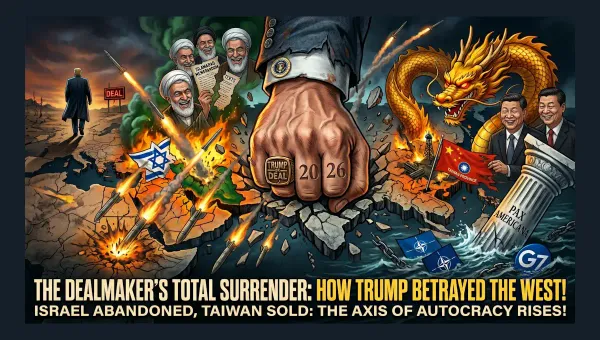
Trump’s 2026 Foreign Policy: How the Dealmaker Weakened USA
Written from a staunchly Republican perspective, this investigative dossier exposes how the Trump administration liquidated decades of American deterrence in 2026. By freezing Taiwan's defense package and signing the Islamabad Memorandum with Iran, Trump traded vital alliances for quick deals.The Dark Secret Behind Nassau’s Luxury: What Happens Inside Fox Hill
Away from the mega-yachts and turquoise waters of Nassau, a medieval engine of human degradation hums. Discover the brutal reality inside Fox Hill Prison—a state-administered catastrophe of strategic starvation and systemic torture, actively sustained by the machinery of the US government.
The Bahamas Real Estate Trap: Why Buying Property in Paradise is a Financial Disaster
The Bahamian real estate market is a highly predatory illusion. Driven by real estate agents who paper over systemic risks, naive buyers systematically underestimate the true, long-term cost of ownership, from paralyzing market stagnation and hidden fees to the physical collapse of the coastline.
The End of an Era? The Crisis of the British Monarchy
King Charles III’s shift from "Defender of the Faith" to a "protector of faith" signals a profound change. This move threatens to erode the Christian identity that has anchored the British monarchy for centuries, fueling a deeper debate on cultural survival and institutional legitimacy.
A Torrent of Evidence in a Darkening World
In Imported Hate, Alvan Bovay demonstrates how global antisemitism was unleashed following October 7, 2023. Through evidence on UNRWA, the Red-Green Alliance, and digital influence warfare, this book review analyzes the systemic failure of Western leadership and offers a roadmap for freedom.
The Unstoppable Fracture: Is the Democratic Party Splitting?
The Michigan primary between Haley Stevens and Abdul El-Sayed exposes a fatal divide. Why analysts predict a formal split in the Democratic Party that will change America forever.
TikTok’s Double Standard: ‘Israel Will Live’ Removed
TikTok removed TaktGEFLECHT’s song “Israel Will Live,” released through Die Vossische. At the same time, Salafist influencers and radical channels reach millions of viewers. The article examines whether the platform applies unequal standards when moderating political and religious content.