Trump’s Iran Peace Deal Fails: Tehran Puts US and UK Leaders on Death List
Trump’s Iran Illusion Shatters: Following the total collapse of the Islamabad Memorandum in July 2026, Tehran’s state-backed Hamshahri newspaper has put Donald Trump and Keir Starmer in crosshairs on a death list. Trump’s corporate diplomacy has failed, pushing the West toward a major war.
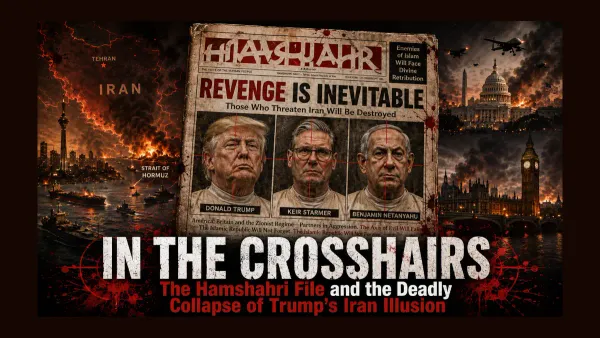
In the Crosshairs: The Hamshahri File and the Deadly Collapse of Trump’s Iran Illusion
An Investigative Report by [Your Publication/Name]
Washington/London/Tehran, July 2026. The face of state-sponsored terror is wearing orange. A chilling front-page feature by Hamshahri—the hardline newspaper controlled directly by the municipality of Tehran—has sent shockwaves through Western intelligence agencies. The propaganda piece displays the free world's top leaders dressed as death-row inmates. At the very top, marked with literal crosshairs, are US President Donald Trump, British Prime Minister Keir Starmer, and Israeli Prime Minister Benjamin Netanyahu. Over the collage, the Persian text reads: "Revenge is inevitable."
This targeted threat is no isolated act of desperation. It is the definitive autopsy of a failed foreign policy experiment. Donald Trump’s highly publicized Islamabad Memorandum, signed just this past June, has officially collapsed. Instead of delivering the promised "Deal of the Century," the summer of 2026 sees the globe teetering on the edge of an uncontrollable regional war. Trump’s transactional approach to diplomacy has backfired, leaving the US and its closest allies directly in the line of fire.
FAQ: What You Need to Know (Google Featured Snippet)
Why is Iran targeting Donald Trump and Keir Starmer?
Following the collapse of the June 2026 peace talks, Tehran’s new leadership under Mojtaba Khamenei has declared Western leaders legitimate targets. President Donald Trump is targeted for violating previous agreements and launching recent airstrikes. UK Prime Minister Keir Starmer and other European leaders are being singled out for maintaining a united front with Washington and imposing crippling economic sanctions on the regime.
What was the Islamabad Memorandum?
The Islamabad Memorandum was a short-lived diplomatic framework brokered by the Trump administration in June 2026. It attempted to apply a business-style transaction to global security: offering the Iranian regime sanctions relief in exchange for a verified freeze of its nuclear program and guaranteed safe passage through international shipping lanes.
Anatomy of a Failure: Why Trump’s Real Estate Strategy Flanked
Donald Trump’s foreign policy doctrine has always relied on the art of the deal: everything is negotiable if you apply enough leverage. However, in the hyper-ideological crucible of the Middle East, this real estate mentality has met a bloody dead end. Trump was fundamentally wrong about how to handle a theological dictatorship.
1. Miscalculating the Succession in Tehran
Following the death of the previous Supreme Leader earlier this year and severe US-Israeli structural strikes against the Islamic Revolutionary Guard Corps (IRGC), Washington assumed Tehran was desperate enough to surrender at the negotiating table. This was a catastrophic intelligence failure. The rise of Mojtaba Khamenei as the new Supreme Leader erased any room for compromise. The new junta derives its domestic legitimacy entirely from fierce anti-Western confrontation. For Khamenei, bending the knee to Trump would mean immediate regime collapse from within.
2. The Red Line at the Strait of Hormuz
The illusion evaporated when Iran, despite ongoing backchannel talks, launched aggressive drone attacks against critical oil tankers in the Persian Gulf. Forced to project strength, Trump pulled the plug on his own agreement at the recent NATO summit in Ankara. Reverting to maximum escalation, Trump denounced Tehran's leadership as "sick people" and "scum." The art of the deal was replaced by the rhetoric of war.
3. The Military Backlash
The kinetic consequences were immediate. US Central Command (CENTCOM) initiated its most aggressive air campaign in years, striking over 170 targets inside Iran, including drone manufacturing plants and command hubs. Tehran retaliated instantly, firing ballistic missiles at US bases in Jordan and Bahrain. The ceasefire is dead, and the Strait of Hormuz—the vital choke point for global energy supplies—is once again an active combat zone.
The Anglo-American Dilemma: From Choke Points to Sleeper Cells
For Washington and Keir Starmer’s government in London, the stakes have risen exponentially. The Hamshahri publication proves that the regime’s moderate faction has been entirely purged. Hamshahri was historically influenced by Parliament Speaker Mohammad Bagher Ghalibaf—the very man Washington hoped would act as a pragmatic bridge builder. With his own mouthpiece printing death threats against Western heads of state, any hope for a diplomatic off-ramp is gone.
Intelligence officials in Washington and London warn that these threats cannot be dismissed as mere rhetoric. Backed into a corner domestically and economically, the Iranian regime has a historical track record of outsourcing its asymmetric warfare through international sleeper cells, maritime piracy, and sophisticated cyber warfare targeted at Western infrastructure.
Conclusion: The Death of Transactional Diplomacy
The smoking ruins of the Islamabad Memorandum expose a bitter truth: you cannot manage an apocalyptic, ideological regime like a Manhattan real estate negotiation. Donald Trump's belief that he could bully and bribe Tehran into submission has achieved the exact opposite. The Middle East is on fire, and the crosshairs drawn in Tehran now stretch directly to Washington and London. Anyone still preaching a corporate-style diplomatic resolution is willfully blind to the geopolitical realities of 2026.
Written by
Read next
The Bahamas Real Estate Trap: Why Buying Property in Paradise is a Financial Disaster
The Bahamian real estate market is a highly predatory illusion. Driven by real estate agents who paper over systemic risks, naive buyers systematically underestimate the true, long-term cost of ownership, from paralyzing market stagnation and hidden fees to the physical collapse of the coastline.Washington’s Dangerous Capitulation to Riyadh
The U.S.-Saudi nuclear agreement is a historic capitulation: Washington hands Riyadh the path to uranium enrichment, shatters the UAE gold standard, and betrays Israel. A dangerous pact that severely threatens global security and Middle East peace.
Surviving Subversion: How the US Can Defend Its Constitution
The American Republic faces an asymmetric challenge. While the First Amendment shields freedom of belief, it was never designed to protect a political framework aiming to replace secular law with a theocratic order. To survive, the US must aggressively utilize its existing constitutional tools.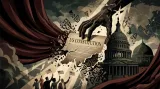
A Torrent of Evidence in a Darkening World
In Imported Hate, Alvan Bovay demonstrates how global antisemitism was unleashed following October 7, 2023. Through evidence on UNRWA, the Red-Green Alliance, and digital influence warfare, this book review analyzes the systemic failure of Western leadership and offers a roadmap for freedom.
The Unstoppable Fracture: Is the Democratic Party Splitting?
The Michigan primary between Haley Stevens and Abdul El-Sayed exposes a fatal divide. Why analysts predict a formal split in the Democratic Party that will change America forever.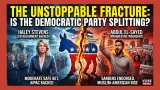
TikTok’s Double Standard: ‘Israel Will Live’ Removed
TikTok removed TaktGEFLECHT’s song “Israel Will Live,” released through Die Vossische. At the same time, Salafist influencers and radical channels reach millions of viewers. The article examines whether the platform applies unequal standards when moderating political and religious content.