The End of an Era? The Crisis of the British Monarchy
King Charles III’s shift from "Defender of the Faith" to a "protector of faith" signals a profound change. This move threatens to erode the Christian identity that has anchored the British monarchy for centuries, fueling a deeper debate on cultural survival and institutional legitimacy.
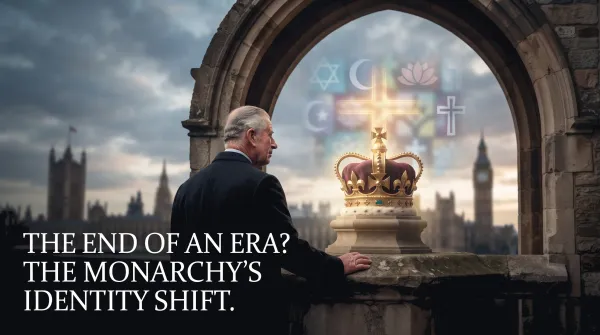
Is the transformation from "Defender of the Faith" to a "protector of faith in a multi-religious nation" the beginning of the end for the British identity?
The British monarchy is undergoing a profound identity shift. With the publication of the Sovereign Grant Report 2025–2026, the official description of royal duties has changed in a way that is subtle, yet impactful. King Charles III no longer presents himself primarily as the centuries-old "Defender of the Faith" (Defensor Fidei), but as a "protector of the space for faith in a multi-religious nation." While proponents praise this as necessary inclusion in a globalized world, critics see it as the beginning of the end for the United Kingdom’s specific Christian identity.
This shift raises a fundamental question: Can a monarchy that sacrifices its historical, Christian roots for a neutral, multi-religious role maintain its constitutional and cultural legitimacy? The debate touches not only on religious sensitivities but on the very substance of Western statehood.
The Historical Foundation: From 1521 to the Coronation Oath
To understand the scale of this development, one must look at the origin of the title Defensor Fidei. In 1521, Pope Leo X granted King Henry VIII this title as thanks for defending Catholic doctrine against Martin Luther. Although Henry later broke with Rome, the title became an expression of exclusive Christian patronage.
The Coronation Oath Act of 1688 cemented this role: The British monarch is not merely a secular head of state but, as Supreme Governor of the Church of England, is directly bound to the Christian faith. This oath is not a formal act; it is the contractual anchor between the Crown, the Church, and the people.
- The "State Church": For centuries, the Anglican Church has been the moral and legal backbone of England.
- Legal Binding: Any departure from the specific Christian mandate weakens the constitutional foundation that elevates English identity from a mere administrative unit to a cultural community.
The Ideology of "Multi-Religious Neutrality"
The current direction of the Royal House under Charles III marks a conscious break with the Crown's historical self-conception. The transformation is not a mere play on words; it is the result of an ideology prevalent among modern elites: religious relativism.
The Philosophical Turn
King Charles III has long expressed sympathies for an inclusive understanding of religion. He views the modern world not as a Christian-dominated sphere, but as a mosaic of diverse faiths. From the perspective of critics, such as the Queen's former chaplain Gavin Ashenden, this approach is disastrous. Ashenden argues that a monarchy which relativizes the claims of the Christian faith loses its moral compass.
The Critique: Relativism as a Danger
The conservative-evangelical organization Christian Institute, led by Ciarán Kelly, warns of:
- Loss of Identity: The population is stripped of its cultural roots, leading to societal disorientation.
- Erosion of Authority: When the "Supreme Governor" questions the uniqueness of his own office, he undermines the institutional stability that has carried England through centuries of crises.
- Cultural Capitulation: The shift is viewed by many as a deliberate abandonment of the traditions that the Crown was meant to uphold.
A Continent in Flux: The European Identity Crisis
The transformation of the British monarchy is a symptom of a broader European crisis. Across the continent, secularization and the withdrawal of Christian markers from public life have left a vacuum. As state leaders renounce their roots out of "false consideration," they signal to the majority that their history is no longer the benchmark of the community.
Unlike the Scandinavian monarchies, the British Crown derived its legitimacy specifically from its immutability and grounding in the Anglican tradition. Abandoning this makes the British Crown appear increasingly like an "institution without an anchor."
Disruption and Social Division
This development fuels the Influence War over the future of Europe. While liberal forces celebrate inclusion as progress, conservative movements view the process as a "cultural capitulation." If the monarchy no longer stands for the foundation of the nation, it loses its function as a binding element—and becomes a battleground for political and cultural strife.
Prince William: Pragmatism or the Last Chance?
As King Charles III pursues a "theologically inclusive" monarchy, many observers look to Prince William. Will he bring the Christian heritage back into focus, or continue the path of secularization?
William represents a more technocratic, modern pragmatism. His "Earthshot Prize" underlines a preference for measurable solutions over philosophical reflection. However, critics fear this could lead to the religious foundation of the monarchy becoming mere folklore. If the head of the Church views faith only as a "social integration tool," the institution loses its spiritual depth.
Conclusion: Identity Needs a Firm Foundation
The transformation of the British monarchy into a manager of multi-religious plurality is a high-stakes experiment. Identity is not a negotiable commodity that can be modernized by swapping titles. A state that actively neutralizes its spiritual roots risks losing its moral compass.
The future of England depends on whether its leadership recognizes that true tolerance is achieved not by abandoning one’s identity, but by consciously and confidently preserving it. Without a firm spiritual and cultural foundation, no institution remains stable in the long run.
#Disruptions, #GlobalFlows, #TheInfluenceWar, #IdentityAndCulture, #Perspectives, #TheGovernanceLab, #TheLens, #TheLibrary, #Uncovered, #Monarchy, #UKPolitics, #KingCharles, #Tradition, #ChristianHeritage
Written by
Read next
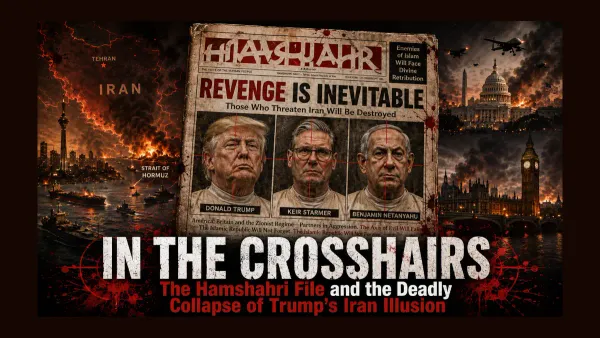
Trump’s Iran Peace Deal Fails: Tehran Puts US and UK Leaders on Death List
Trump’s Iran Illusion Shatters: Following the total collapse of the Islamabad Memorandum in July 2026, Tehran’s state-backed Hamshahri newspaper has put Donald Trump and Keir Starmer in crosshairs on a death list. Trump’s corporate diplomacy has failed, pushing the West toward a major war.The Dark Secret Behind Nassau’s Luxury: What Happens Inside Fox Hill
Away from the mega-yachts and turquoise waters of Nassau, a medieval engine of human degradation hums. Discover the brutal reality inside Fox Hill Prison—a state-administered catastrophe of strategic starvation and systemic torture, actively sustained by the machinery of the US government.
The Bahamas Real Estate Trap: Why Buying Property in Paradise is a Financial Disaster
The Bahamian real estate market is a highly predatory illusion. Driven by real estate agents who paper over systemic risks, naive buyers systematically underestimate the true, long-term cost of ownership, from paralyzing market stagnation and hidden fees to the physical collapse of the coastline.
The Illusion of Sovereignty: The Methodical and Economic Collapse of the Bahamas
ehind the glossy tourist resorts, the Bahamas is teetering on the edge of economic and institutional collapse. Plagued by a bloated bureaucratic state, systemic corruption, and a toxic 77% debt-to-GDP ratio, the nation is quietly omitted from the Global Peace Index. It's time to halt the loans.
A Torrent of Evidence in a Darkening World
In Imported Hate, Alvan Bovay demonstrates how global antisemitism was unleashed following October 7, 2023. Through evidence on UNRWA, the Red-Green Alliance, and digital influence warfare, this book review analyzes the systemic failure of Western leadership and offers a roadmap for freedom.
The Unstoppable Fracture: Is the Democratic Party Splitting?
The Michigan primary between Haley Stevens and Abdul El-Sayed exposes a fatal divide. Why analysts predict a formal split in the Democratic Party that will change America forever.
TikTok’s Double Standard: ‘Israel Will Live’ Removed
TikTok removed TaktGEFLECHT’s song “Israel Will Live,” released through Die Vossische. At the same time, Salafist influencers and radical channels reach millions of viewers. The article examines whether the platform applies unequal standards when moderating political and religious content.