
Why the Pope is overreaching on AI
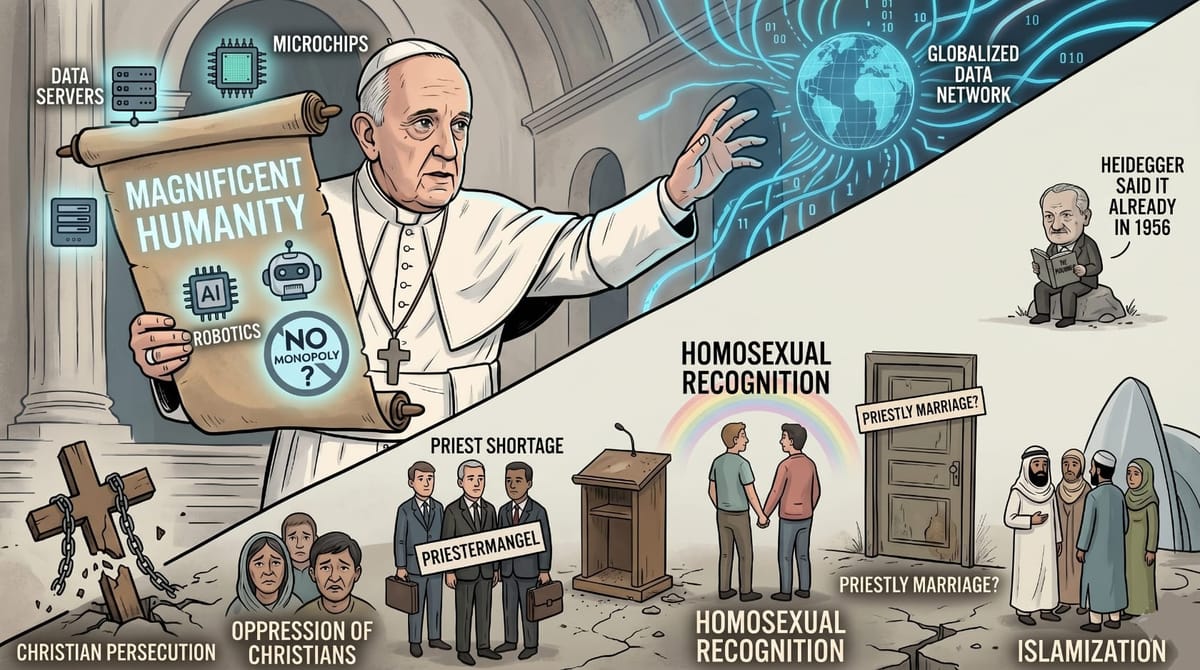
When the Pope meditates quasi ex cathedra on computers and robots, he does the Church a disservice. While the Vatican debates neural networks, the Church is bleeding out on real frontlines such as the shortage of priests, outdated sexual ethics, and the global persecution of Christians.
The Church stares at a screen while the foundations around it crumble.
The announcement is striking: Pope Leo XIV is dedicating his first encyclical, “Magnifica humanitas,” not to classical theological mysteries, but to artificial intelligence. He warns of monopolies in the tech sector and claims the Church’s interpretative authority over the digital age. But with all due respect to the Vatican’s moral compass: what exactly does regulating algorithms have to do with Catholic doctrine?
When the Pope reflects, in effect ex cathedra, on computers and robots, he does the Church a disservice. For one thing, philosopher Martin Heidegger already said everything essential about the nature of technology and the danger of total availability seventy years ago—no papal moral briefing required. More importantly, and far more seriously, this digital turn looks like an escape from the real, burning problems of the present. The Church is staring at a screen while its foundations crumble around it.
The Church’s real problem areas
While the Vatican debates neural networks, the Catholic Church is hemorrhaging in very different places. There are issues that urgently demand the Pope’s full attention and moral authority:
Persecution of Christians and Islamization: Around the world, millions of Christians are oppressed, displaced, or killed because of their faith. Defending religious freedom and taking a firm stand against radical movements that push Christianity back should be at the very top of the papal agenda.
Structural crisis in the clergy: The acute shortage of priests is not a future scenario but a destructive reality for many parishes. A bold step forward—such as abolishing mandatory celibacy and allowing priestly marriage—could help address this and bring the Church closer to people’s lived realities.
Recognition of homosexuality: The Church is losing massive credibility because it often remains stuck in the past on questions of sexual morality. A modern, respectful recognition of same-sex partnerships is long overdue in order to live up to the Christian commandment of love of one’s neighbor.
Artificial intelligence is not a matter of faith
Artificial intelligence is a technological, economic, and political phenomenon. Its regulation belongs to parliaments, antitrust authorities, and ethics councils—not to the Congregation for the Doctrine of the Faith.
Leo XIV should refocus on the Church’s core mission: pastoral care, the preservation of faith, and the protection of believers in an increasingly hostile world. If the Pope wants to change the world, he should address the failures within his own institution and the global persecution of his flock, rather than analyzing Silicon Valley monopolies. After all, algorithms do not have souls—people who are turning away from the Church do.