BookTok Didn’t Kill Reading. It Rewired It.
BookTok did not destroy reading culture. It transformed it. Social media has turned readers into tastemakers, older books into new hits and literary discovery into an algorithmic spectacle that publishers can no longer ignore.
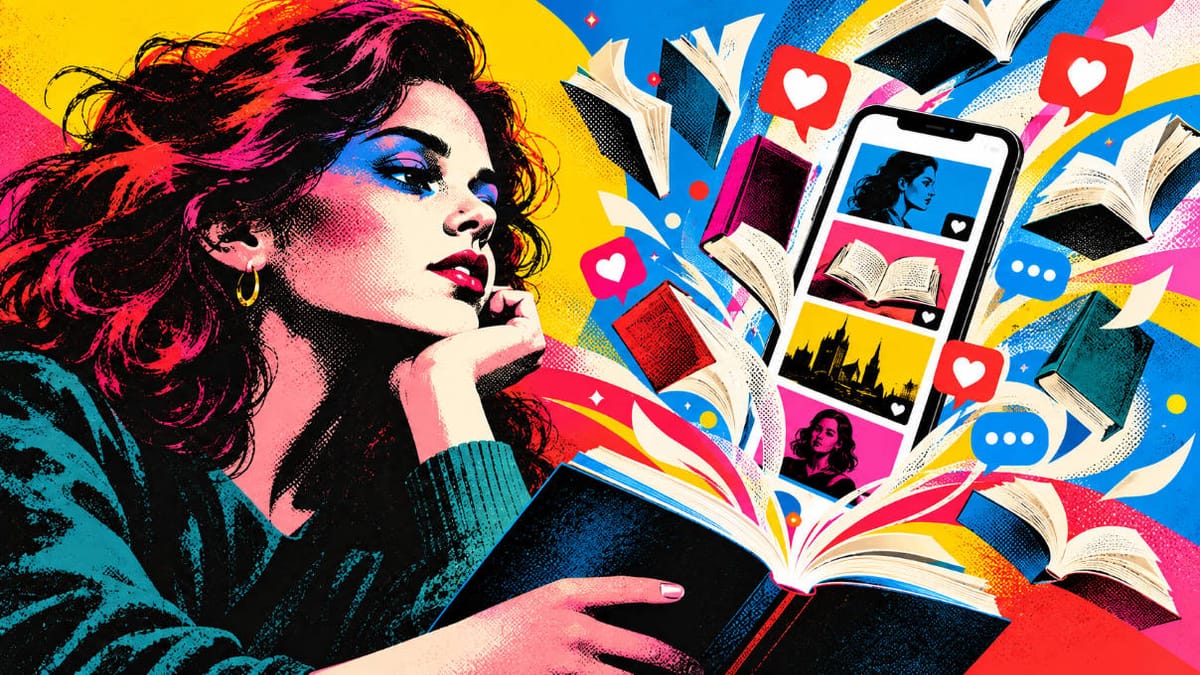
The literary world once feared that social media would destroy attention spans. Instead, TikTok turned reading into a spectacle, a community—and one of publishing’s most powerful discovery engines.
For years, the prognosis sounded grim.
Young people were supposedly abandoning books. Smartphones were replacing attention spans. Social media was flattening culture into a sequence of fifteen-second distractions. Publishing, we were told, was entering a slow decline in which serious reading would survive only as a niche habit for academics, retirees and the stubbornly analog.
Then something unexpected happened.
Books became social media content.
Not as an afterthought. Not as advertising inserted awkwardly between dance videos, beauty tutorials and celebrity gossip. Books themselves became the content.
A young reader crying over a romance novel. A stack of fantasy titles arranged under candlelight. A creator holding up a paperback and saying, “This book ruined me.” Another insisting that a novel “changed the chemistry of my brain.” A twenty-second clip of highlighted pages accompanied by a trending song.
What traditional literary culture might once have dismissed as unserious turned into a formidable recommendation machine.
BookTok did not restore the old culture of reading.
It created a new one.
Reading Became Visible
For most of modern publishing history, reading was largely private.
A reader discovered a novel through a review, a bookseller, a newspaper, a teacher, a friend or the front table of a bookstore. Then the actual act of reading disappeared from public view.
Social media changed that.
Reading became performative.
That word is often used as an insult, but it describes something more important here. Readers no longer merely consume books; many display the fact that they are consuming them.
Books appear in photographs.
Books appear in bedroom tours.
Books appear in morning routines.
Books appear in “what I read this month” videos.
Books become part of personal identity in much the same way that clothing, music and travel already had.
The result is that reading has become socially legible.
A teenager can now signal an interest in dark academia, romantic fantasy, queer fiction, literary horror or contemporary romance with a shelf, a tote bag and three paperbacks.
The book is no longer merely a text.
It is also an object, an aesthetic and a badge of affiliation.
The Algorithm Replaced the Review Page
This transformation has unsettled the traditional gatekeepers of literary culture.
The old system depended heavily on institutional recommendation.
Newspaper critics, literary supplements, bookstore buyers, librarians, prize committees and publishing houses played a large role in deciding which books received attention.
That hierarchy has not disappeared.
But it has been weakened.
A novel can now become culturally important without first being declared important by a critic.
That is one of the most consequential shifts in contemporary publishing.
The algorithm does not ask whether a book has received a major review.
It asks whether people stop scrolling.
That changes the economics of attention.
A visibly emotional reaction can outperform a thousand-word review.
A single line from a romance novel can circulate further than an interview with its author.
A creator with a loyal audience can move readers toward a title that traditional media ignored.
The literary establishment may dislike the mechanism.
Publishers cannot afford to ignore it.
Books Became Backlist Products Again
One of the most unusual features of BookTok culture is its indifference to the traditional publishing calendar.
Publishing has historically been obsessed with the new.
New season.
New list.
New release.
New publicity campaign.
Social media does not necessarily care.
A reader discovers a book three years late and treats the discovery as immediate.
Another creator makes a video about it.
Then another.
Suddenly a title that had passed through its original marketing window is alive again.
This is profoundly important for authors and publishers because books are unusual cultural products.
A film leaves cinemas.
A newspaper article vanishes into yesterday.
A television season is replaced by the next one.
A book can wait.
It can sit on a shelf for years and become relevant again because a new audience finds it.
BookTok turned that latent possibility into a repeatable phenomenon.
The backlist became searchable culture.
Emotion Beats Prestige
The language of BookTok is revealing.
People rarely recommend books by saying they are technically accomplished.
They say:
It destroyed me.
I could not put it down.
I stayed awake until three in the morning.
I hated this character.
I need everyone to read this.
That language would make some traditional critics uncomfortable.
But it tells us something fundamental about how recommendations work.
Readers sell books to other readers through emotion.
This is not entirely new.
Word of mouth has always been powerful.
What is new is the scale.
An enthusiastic recommendation between two friends used to reach one person.
The digital version can reach a million.
That helps explain why romance, fantasy, romantasy, young adult fiction, thrillers and emotionally intense contemporary novels thrive in social environments.
They are easy to describe in emotional terms.
They generate reactions.
And reactions generate content.
The Cover Matters Again
There is another consequence that publishing professionals understand immediately.
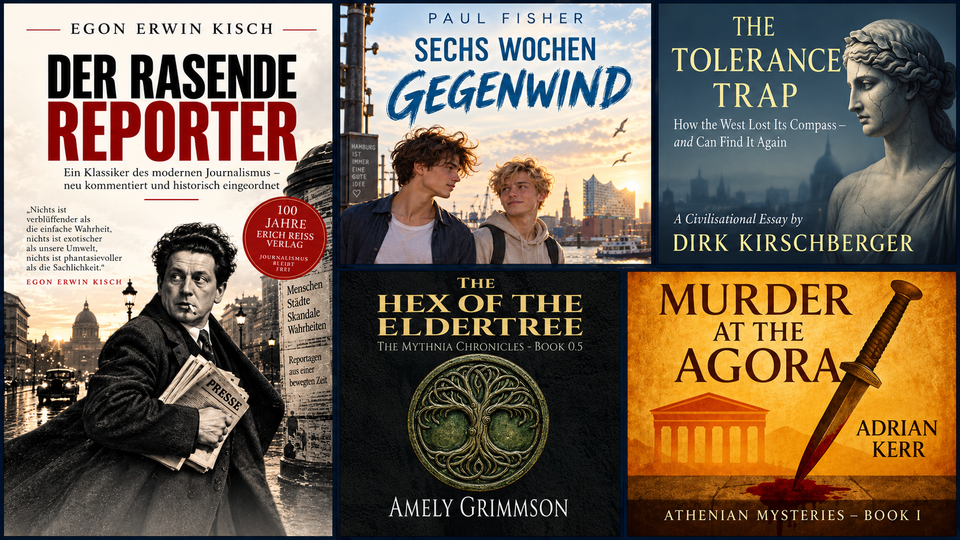
Books must now survive visually.
A cover has always mattered in a bookstore.
But social media gives it a second job.
It must work at thumbnail size.
It must look good beside other books.
It must remain recognizable in a moving video.
It must survive a screen.
That has encouraged a strange convergence between literary taste and visual branding.
Readers increasingly recognize genres before reading a word of copy.
Certain typographies signal romance.
Illustrated couples signal another type of romance.
Ornate fantasy covers signal elaborate world-building.
Dark minimalism signals psychological suspense.
A book cover is now part packaging, part advertisement and part social-media asset.
Publishers increasingly design for all three.
The Downside: Sameness
The success of algorithmic discovery also creates a problem.
Algorithms reward repetition.
If one kind of book performs well, creators make more content about similar books.
Publishers notice.
Agents notice.
Authors notice.
Then the market begins producing more of what already works.
The result can be cultural acceleration and cultural narrowing at the same time.
More people are talking about books.
But many are talking about the same books.
Certain titles become unavoidable.
Certain tropes become dominant.
Certain covers begin to resemble each other.
Certain plot structures appear repeatedly because readers have already demonstrated that they respond to them.
The same recommendation system that can rescue an overlooked novel can also create a literary monoculture.
That tension sits at the center of BookTok.
It democratizes discovery while concentrating attention.
The Reader Has Become a Sales Force
Traditional publishing once separated reader and marketer.
The publisher advertised.
The reviewer reviewed.
The bookseller sold.
The reader read.
Those roles have blurred.
Readers now perform unpaid promotional labor constantly.
They photograph books.
Rank them.
Quote them.
Recommend them.
Film unboxings.
Build themed shelves.
Create reading challenges.
Argue about endings.
Defend authors.
Attack authors.
Form communities around fictional characters.
From an industry perspective, this is extraordinarily valuable.
A successful book now generates its own secondary marketing ecosystem.
The more emotionally engaged the audience becomes, the more content the audience produces.
The marketing campaign no longer necessarily ends when the publisher stops paying for it.
Sometimes that is when it begins.
But Not Every Book Can Become Content
The danger for publishers is obvious.
Once a platform becomes influential, everyone tries to manufacture success on that platform.
That rarely works.
BookTok culture depends heavily on authenticity—or at least the appearance of authenticity.
Readers can sense when a recommendation is merely an advertisement.
The most effective videos frequently look spontaneous, personal and emotionally excessive.
Corporate language performs poorly in that environment.
Publishing therefore faces an unusual dilemma.
It wants the reach of influencer culture without visibly controlling it.
That is a difficult balance.
The moment enthusiasm looks purchased, it loses some of its power.
Authors Are Becoming Public Products
The transformation is also changing what it means to be an author.
Once, a novelist could plausibly argue that the work should speak for itself.
That position is increasingly difficult for debut and midlist writers.
Authors are encouraged to build platforms.
They post writing routines.
They explain characters.
They answer reader questions.
They reveal cover designs.
They film bookstore visits.
They participate in trends.
They become part of the product ecosystem surrounding the book.
Some are excellent at it.
Some hate it.
And some undoubtedly entered writing precisely because they did not want to perform constantly before strangers.
The modern publishing economy increasingly asks them to do both.
Write the novel.
Then become the channel through which the novel is sold.
Serious Reading Did Not Disappear
The most persistent criticism of BookTok is that it trivializes literature.
Sometimes it does.
So did airport bookstores.
So did television book clubs.
So did mass-market paperbacks.
So did newspaper bestseller lists.
Popular literary culture has never been pure.
The more interesting fact is that millions of people are publicly discussing books in spaces that were supposedly going to replace reading altogether.
A fifteen-second video may lead to a fifteen-hour novel.
That is not necessarily the death of attention.
It may simply be a new route toward it.
The mistake is assuming that the path to serious reading must itself look serious.
It does not.
A reader can discover Dostoevsky through a university seminar.
Another can discover him through a meme.
The text is the same once the book opens.
The New Literary Gatekeeper Is Everyone
BookTok's deepest significance may therefore have little to do with TikTok itself.
Platforms change.
Audiences migrate.
Algorithms rise and fall.
The larger shift is permanent.
Literary discovery has moved from institutions toward networks of readers.
Critics still matter.
Bookstores still matter.
Publishers still matter.
But none of them holds the monopoly it once did.
The twenty-first-century bestseller can emerge from an editorial meeting.
Or a prize committee.
Or a bookseller.
Or a teenager speaking into a phone in her bedroom.
Publishing spent years worrying that the internet would make books irrelevant.
Instead, the internet turned readers into booksellers.
The industry is still learning what that means.